
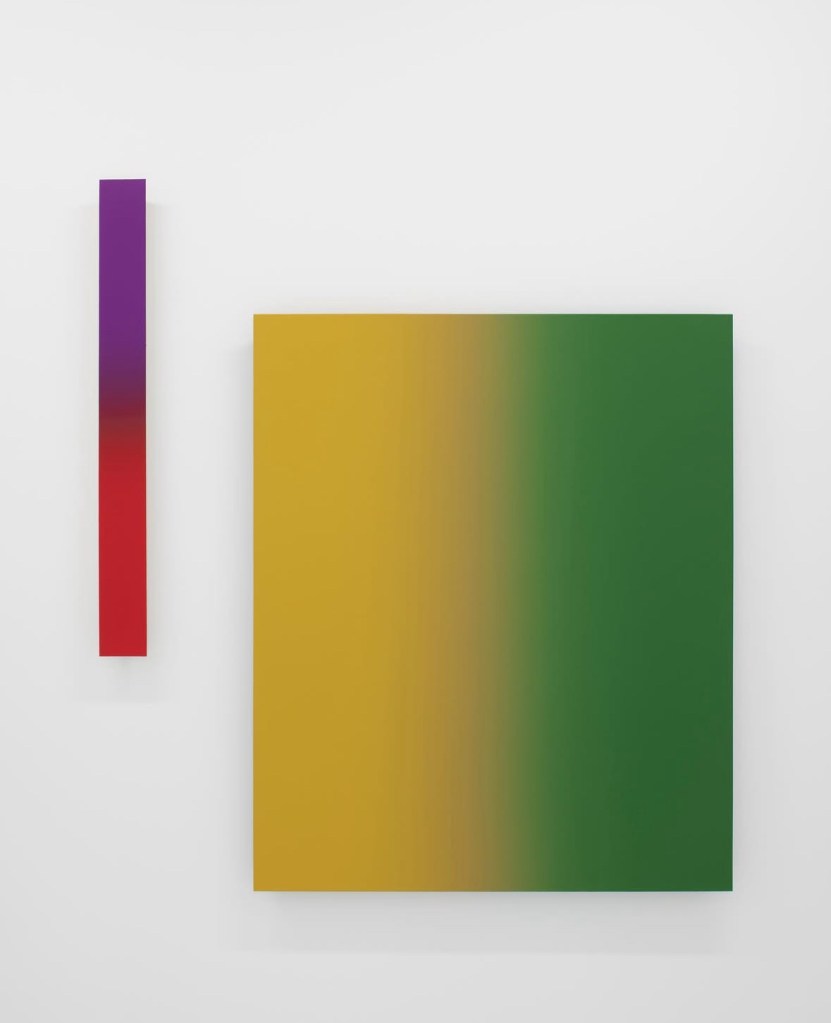
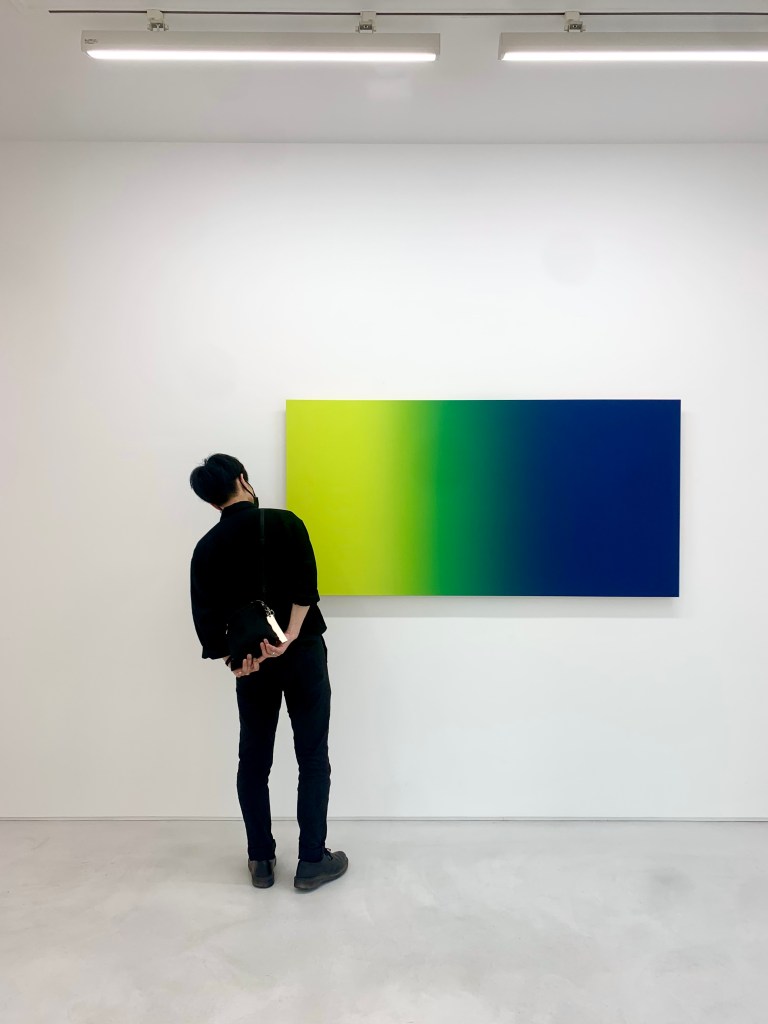
Kyoto-based artist Toru Kamiya (b. 1969) presents his solo exhibition Portraits, his first with imura art gallery in nine years, following his 2014 show.
After completing his MFA in oil painting at Tokyo University of Fine Arts and Music (now Tokyo University of the Arts), Kamiya studied at the National College of Art and Design in Dublin, Ireland, as a recipient of an Irish government scholarship. He currently serves as Associate Professor at Kyoto University of the Arts. His work is widely recognized for its refined tonal gradations and quiet luminosity, and can be seen in numerous public installations, including Toranomon Hills, Tokyo Midtown, and Kyushu Dental University.
Best known for his distinctive color-gradient paintings executed in acrylic, Kamiya meticulously builds his compositions layer by layer. The artist prepares his pigments by hand, then spreads each tone across the surface using a self-devised tool made by aligning several brushes in a row. The result is a seamless field of color, where the gesture of the hand is nearly erased. Through repeated layering and subtle shifts in hue, his paintings attain both material density and optical delicacy.
The Portraits series extends this exploration of color into the realm of human connection. Although these works are formally abstract, each originates from a person: a member of Kamiya’s family, a colleague, or someone within his Kyoto community. A synesthesia who perceives colors in association with numbers, Kamiya often begins a portrait by asking his subjects about their birthday or other number-related details. He then translates these numeric cues into color. Unlike his previous gradation works, where harmony and visual balance are central concerns, these portraits are guided by perception rather than aesthetics: an attempt to “see” others through color as sensation.
In its concern with color as both emotional register and biographical trace, Kamiya’s work may perhaps recall Frank Bowling’s Map Series, where the interplay of pigment and geography blurs the boundary between abstraction and lived history. Similarly, Kamiya’s gradations evoke invisible connections between people, time, and place mapped not in shape but in tone.
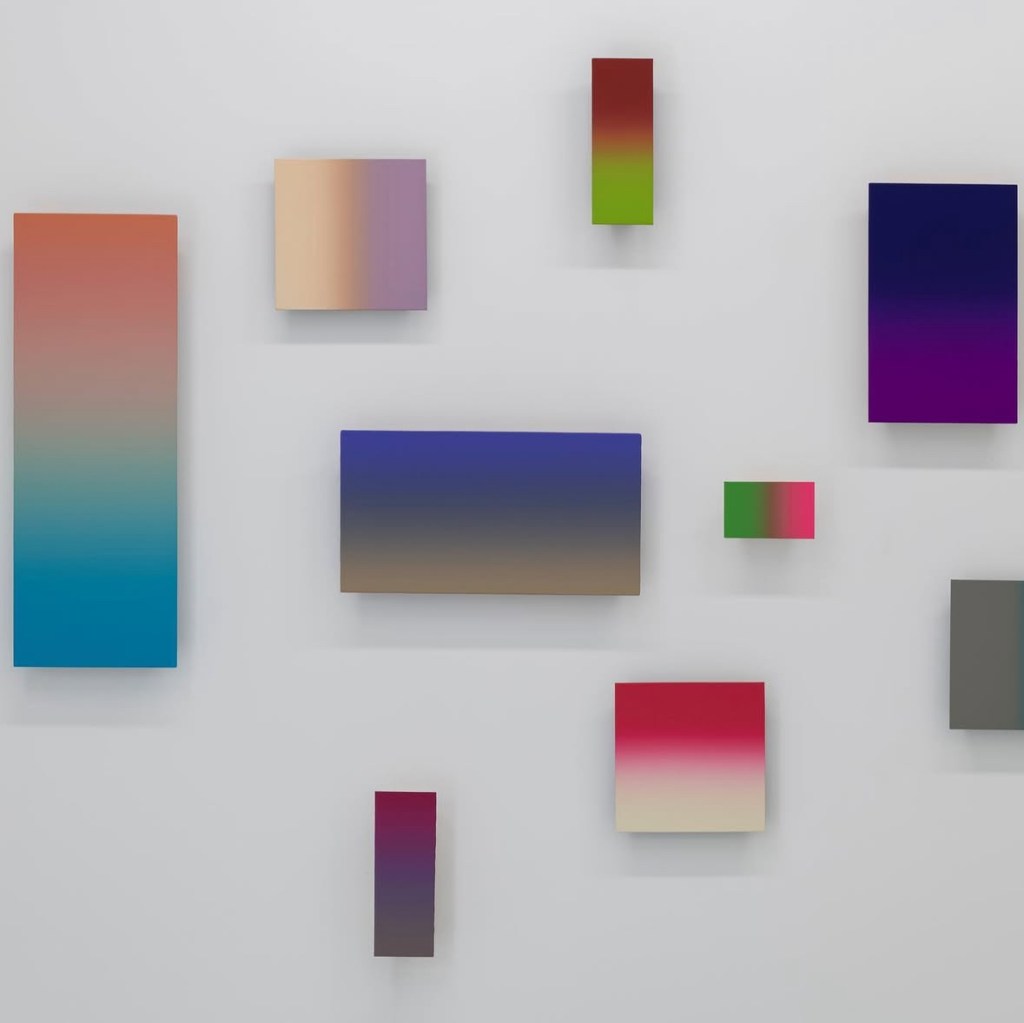
A highlight of the exhibition is a modular painting composed of nine panels of varying sizes. While each segment stands independently, together they form a rhythmic vertical composition that engages the full height of the gallery space. The variable arrangement of the panels introduces an openness and fluidity that contrasts with the fixed, physical nature of painting, signalling a new direction in Kamiya’s practice.
The smaller canvases, meanwhile, unfold across the walls like a chromatic melody, a sequence of tones and intervals, where color resonates like sound. Each painting feels like a note struck on a xylophone: distinct yet inseparable from the harmony of the whole.
 プロテオドラ Theodora Poulot