
In today’s world, engaging with issues of significant social impact has become of critical importance. Within this setting, comic narratives have evolved, no longer serving solely as entertainment, but as a potent platform for grappling with pressing societal concerns.
Superheroes in particular, provide a compelling lens through which to examine issues of marginalization; as their superhuman abilities and backgrounds often mirror the experiences of real-world minority groups and reflect real-world struggles.
This essay explores the dual strategies employed by comic companies to address real-world issues: one that utilizes metaphors and symbolism to subtly capture societal biases and struggles, presenting an allegorical reflection of the adversities that beset our communities; the other, a more direct approach, with characters whose identities represent these issues head-on. My analysis will follow this main question: Are allegorical figures a good way to address real world issues or is it better to tackle them straightforwardly, with more explicit characters? Initially, I will concentrate on the scope and timelessness of allegorical figures, investigating how they are capable of embodying minority groups in a broad context. I will then pursue my analysis by critiquing the limitations inherent to this representation, particularly its potential misinterpretation and inadequacy in conveying the nuanced complexities of real-world struggles. Subsequently, I will focus on characters with highly specific and distinctive identities, studying their capacity to personify individual communities before analyzing the risks and challenges of such interpretation.
To start with, allegorical figures stand for interchangeability and universality. Those two core characteristics allow outcast figures, like the X-Men or the Visions, to represent any oppressed minority within varied societal contexts. The characters’ genders, races or sexual identities are not very significant here. What truly matters is their difference from the dominant society. For example, the mutant metaphor reveals its engagement with the principle of intersectionality, which illustrates how various forms of oppression can overlap and compound. That is why the mutants’ allegory represents a spectrum of inequalities, encompassing class, race, and sexuality and is loose enough to be applied to many different social fights, from the civil rights movement of the 60s to LGBTQIA+ rights more recently. Indeed, such characters can endlessly be “recycled”, dealing with evolving concerns and issues, as they stand for none in particular. Allegory is also a good method to invent conflicts that feel resonant and realistic for fantasy narratives, thereby engaging a broader audience who may not typically find such fantasy themes appealing.
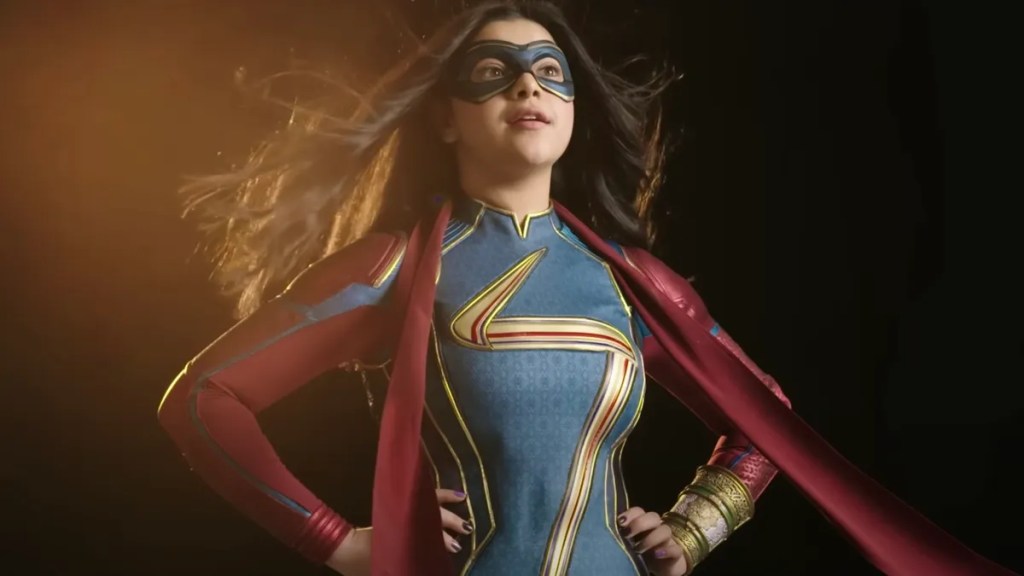
Contrary to the allegorical representation of superheroes, certain characters are intricately tied to a distinct identity, providing an alternate method for addressing real-world concerns, through the lens of relatability. A notable example is Ms. Marvel, a character with multiple levels of intersectionality, as she is a Pakistani-American Muslim teenage girl from a simple suburban and immigrant background. It’s important to note that Ms. Marvel emerged way later than the X-Men or the Visions, in an epoch increasingly conscious of diversity and inclusivity, as issues of representation are gaining a lot of attention. Moreover, today’s young generation has new values and actively seeks characters that reflect their realities and aspirations.
 プロテオドラ Theodora Poulot