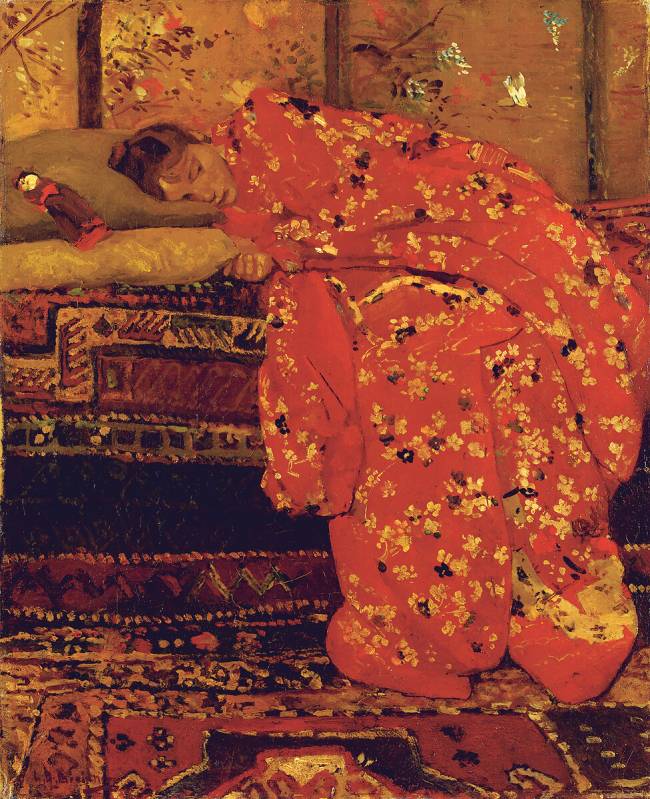
Significant figure of the Dutch Impressionist movement, George Hendrik Breitner (1857 – 1923) was a renowned painter celebrated for his depictions of Amsterdam’s city life and genre paintings.
Born in Rotterdam in 1857, George Hendrik Breitner enrolled at the Art Academy of The Hague in 1876, where he refined his artistic technique and frequently received accolades for his talent.
His style, marked by a profound social awareness reminiscent of French authors like Émile Zola, centered on the everyday lives of common people. This focus on the social landscape was a passion Breitner shared with contemporaries such as Vincent van Gogh and Bernard Blommers.
In 1886, Breitner enrolled at the Rijksakademie in Amsterdam, where he encountered a vibrant and bustling city marked by extensive demolitions and renovations. He quickly became affiliated with the Tachtigers, a group with whom he shared interests and visions.
During the 1880s, Amsterdam transformed into a major urban center. The daily hustle and bustle of the city—the common folk engaging in their daily chores, the constant movement of horse-drawn trams, and the busy ballet of pedestrians, as well as the ongoing construction and activity at the ports—became a wellspring of inspiration for Breitner. It was against this backdrop of ceaseless activity that he painted his series of young girls in kimonos in his Lauriergracht studio in 1893.
There, he met Geesje Kwak, a seventeen-year-old girl who worked at a nearby sewing workshop and became his favored model, although he also drew inspiration from other girls.
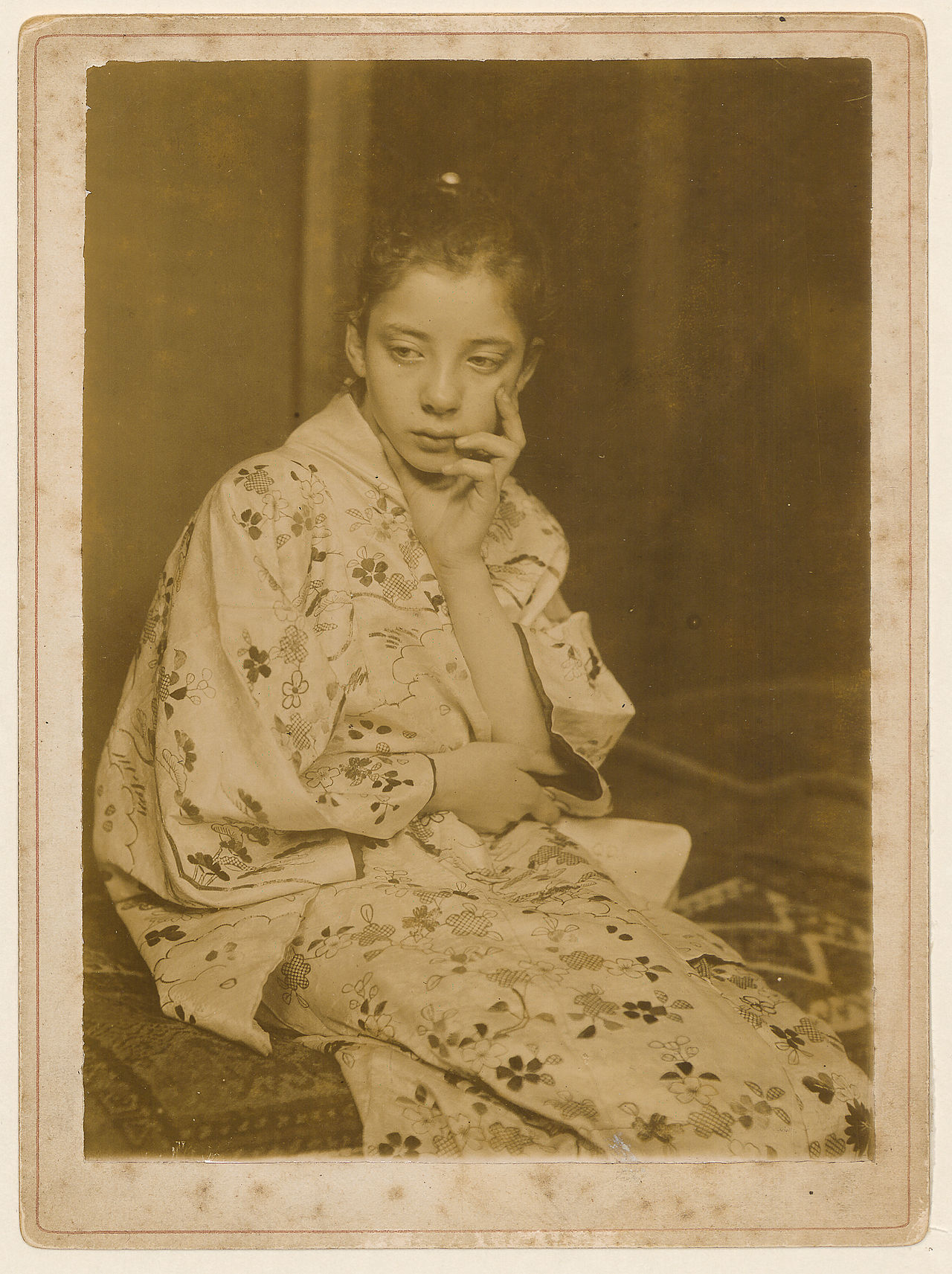
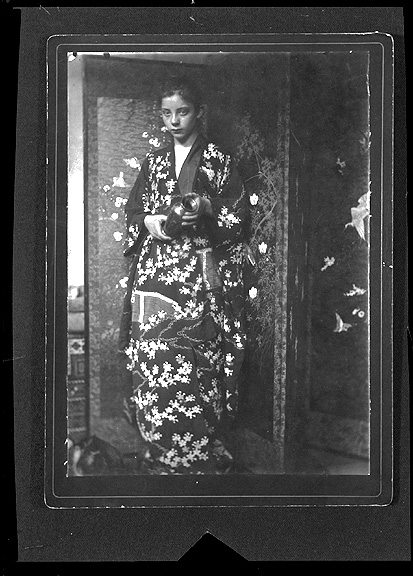
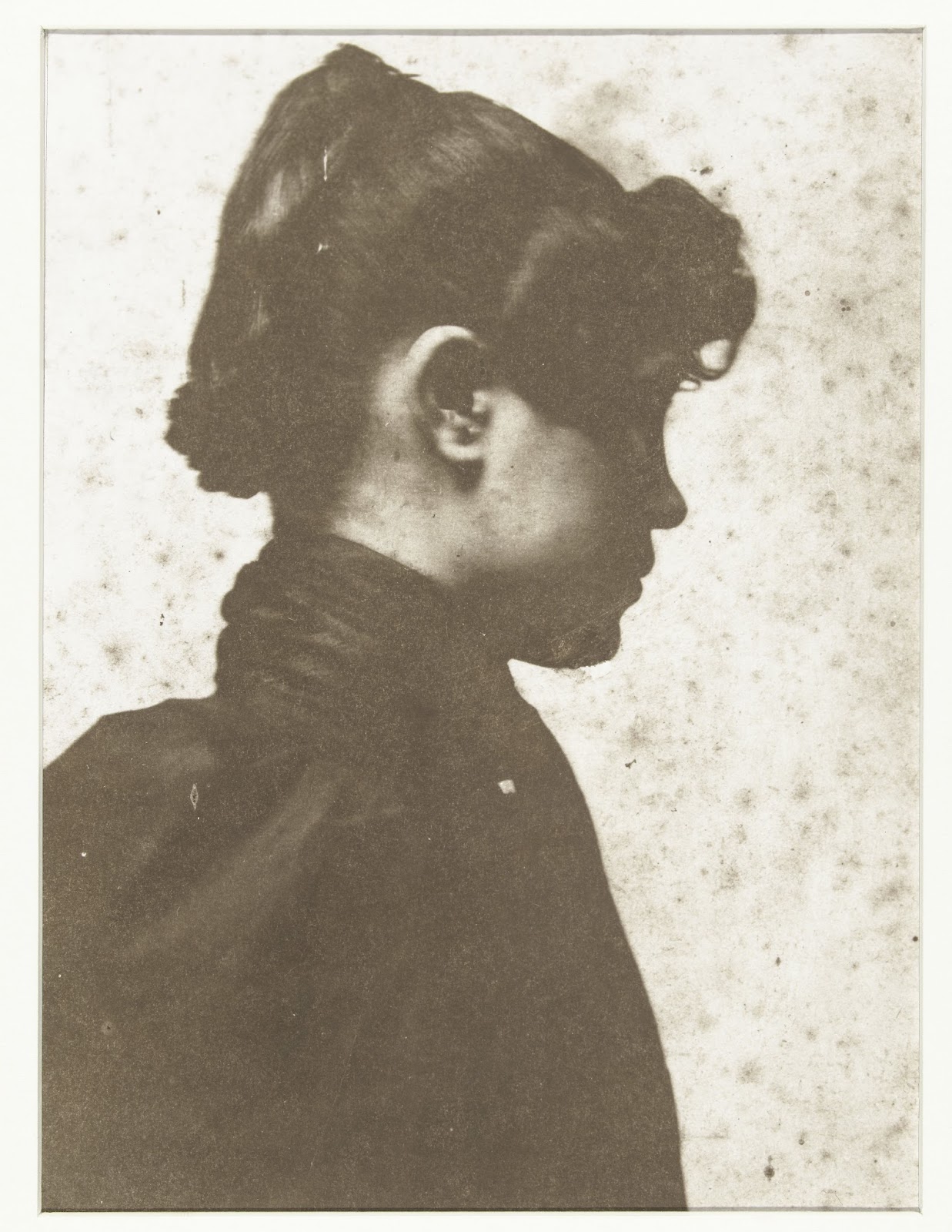
In the midst of the 19th century, as Japan opened its borders to the West, European intrigue in “japonaiserie” swiftly evolved into a fervent appreciation for Japanese art and style. Known predominantly for his dynamic street scenes, Breitner shared his contemporaries’ enthrallment with Japanese culture, amassing a notable collection of Japanese prints.
Between 1893 and 1896, Breitner produced a series of thirteen Girl in kimono paintings where the influence of Japanese printmaking is clearly discernible, aligning his works with the Japonisme movement.
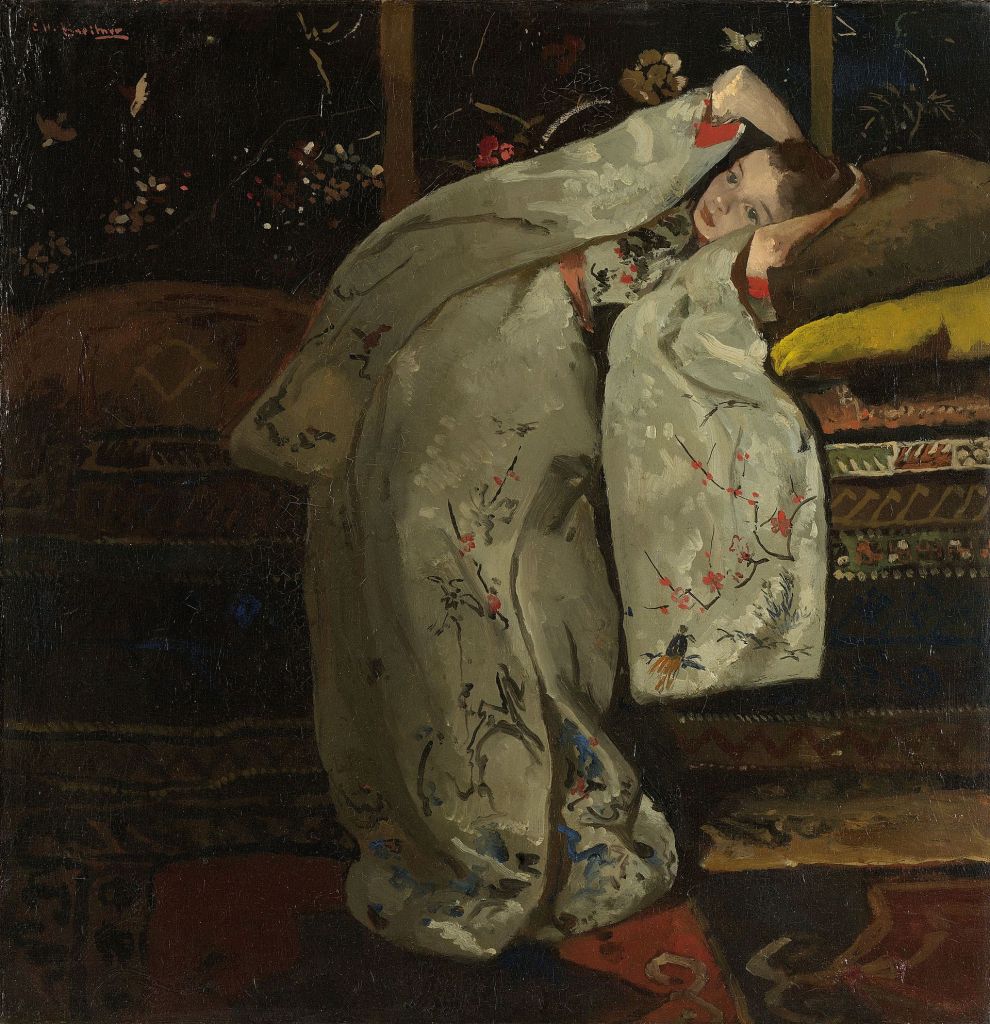
In Girl in a White Kimono, Breitner depicts a contemplative Geesje Kwak, arrayed in a white kimono reclining on a sofa. The eye is immediately drawn to the intricately embroidered, white silk kimono—the centerpiece of the artwork—highlighted by red-trimmed sleeves and an orange sash. The kimono drapes elegantly from the bed’s surface to the darker carpet below. The painting presents a seemingly flat composition; Breitner skillfully blends the foreground with the backdrop, consisting of Japanese screens, creating a harmonious arrangement reminiscent of the Japanese woodblock prints he so greatly admired.
In another painting, Girl in Red Kimono, Geesje Kwak, 1893-95, Breitner represents the same subject.
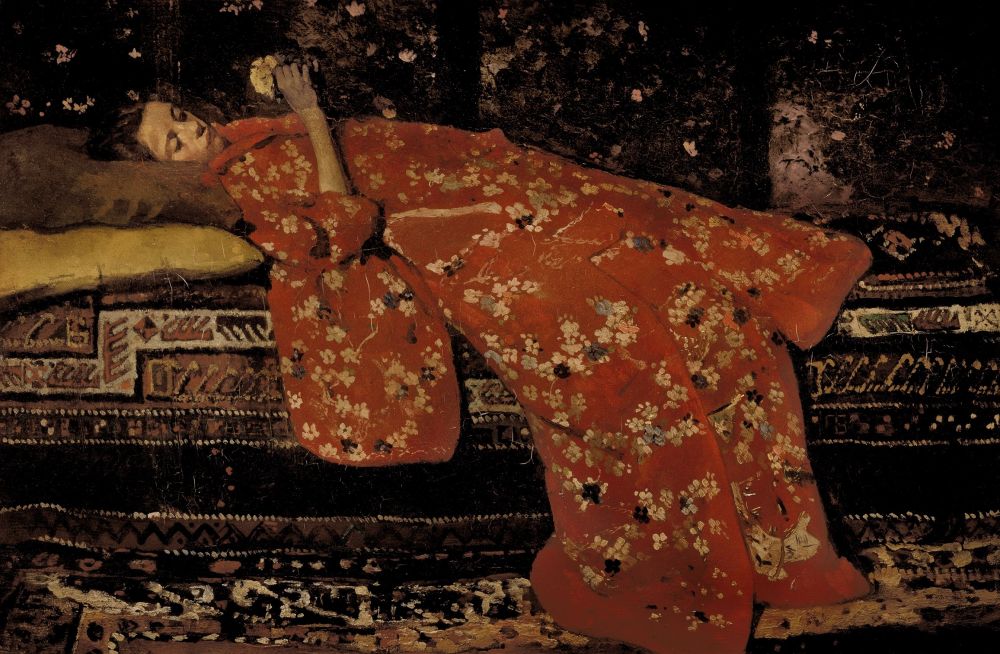
He portrays a young girl draped in a striking red kimono, lying casually on a sofa. The model’s relaxed pose and the implied sensuality were deemed provocative, even erotic by critics of the era, who noted a clear resemblance to Manet’s Olympia and traditional odalisques. There was also commentary on the stark contrast between the seemingly ordinary subject and the opulent, exotic fabrics and ornaments from the Far East. Nonetheless, the canvas indisputably reflects the tenderness and captivation with which George Hendrik Breitner painted Geesje, with an almost amorous intensity.
In the backdrop, subtle brushstrokes intimate the colors of a Japanese screen, its detail slightly overshadowed by the vivid red of the kimono in the foreground.
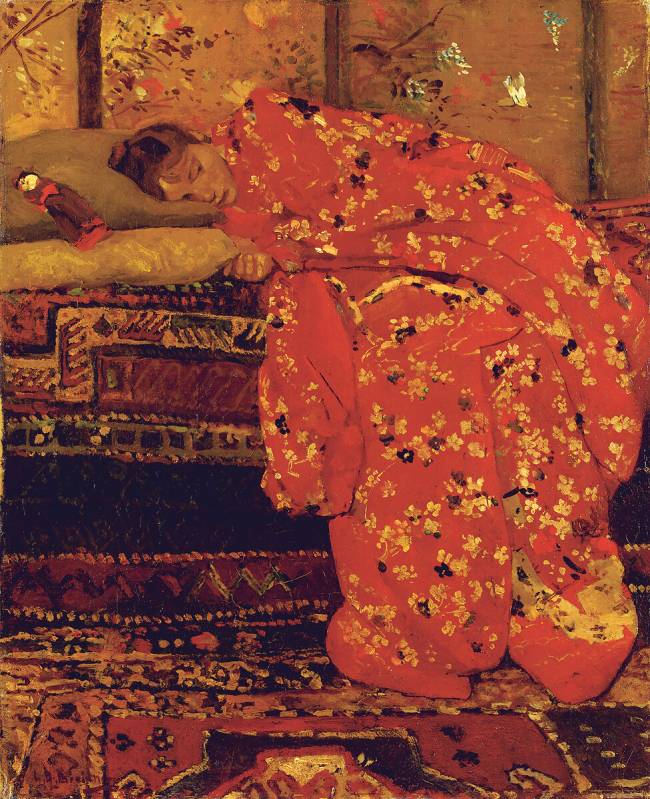
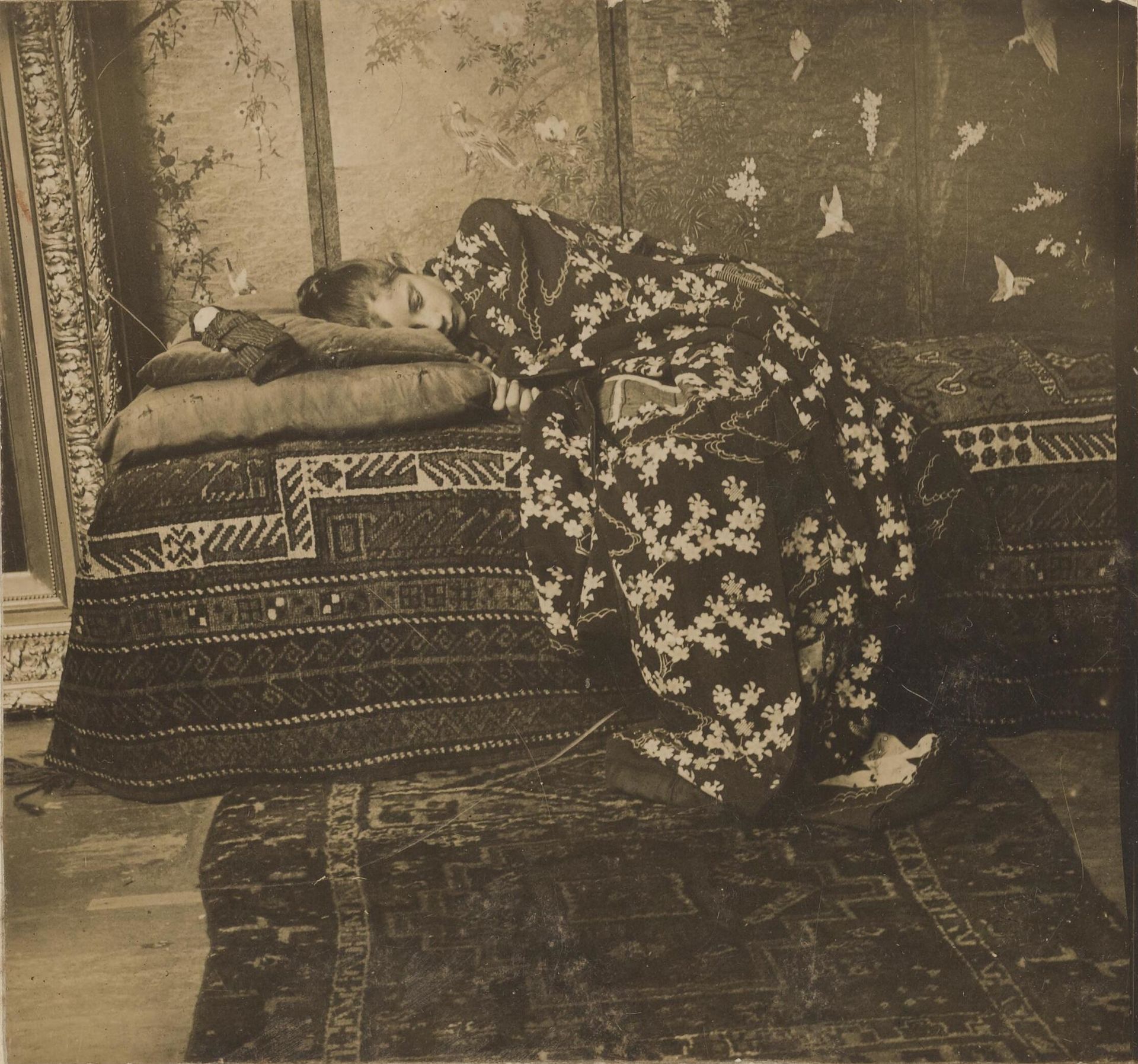


Breitner’s other paintings, which feature young girls draped in Japanese kimonos, would later inspire Vincent van Gogh, who was himself a passionate admirer of Japanese art.
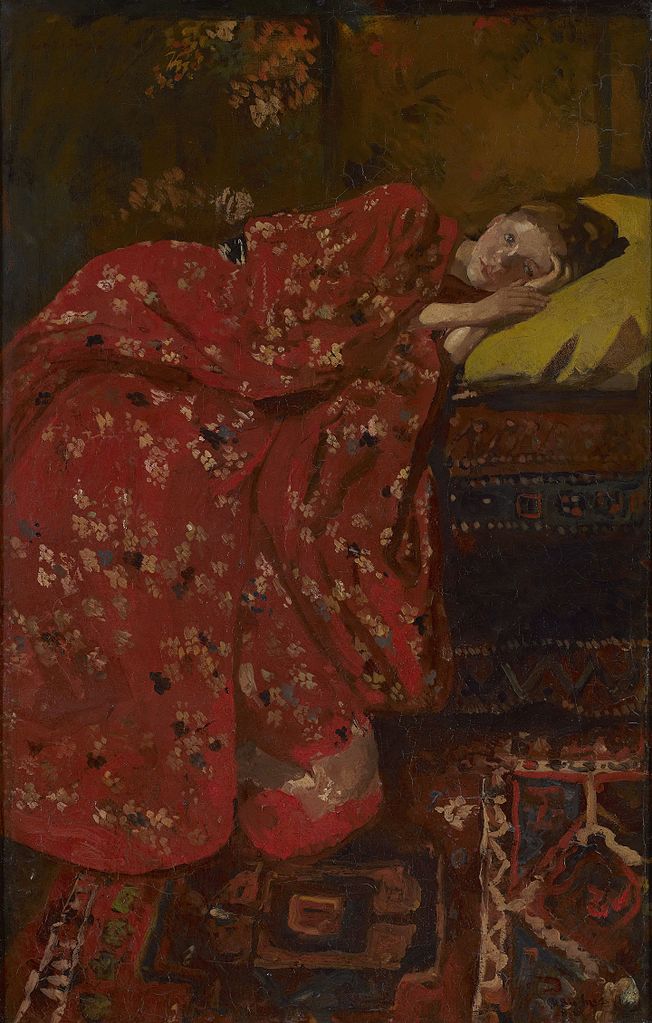
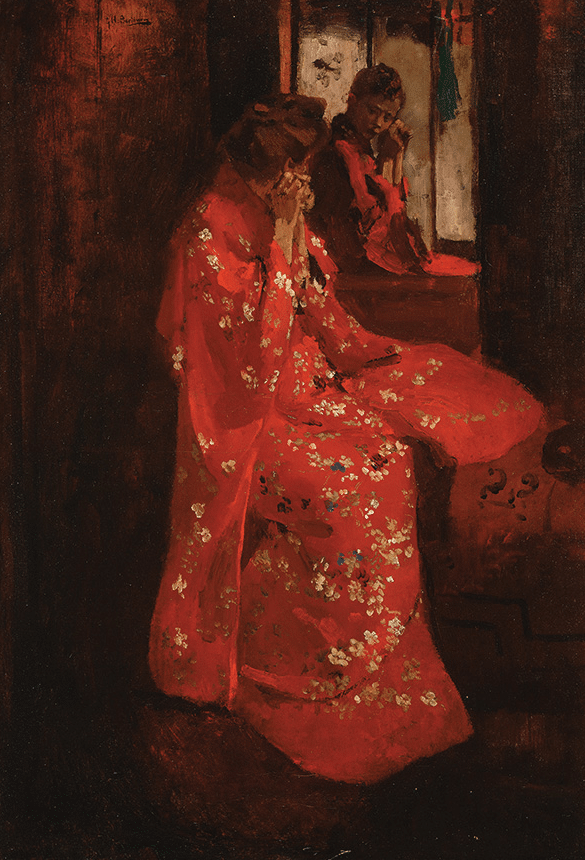
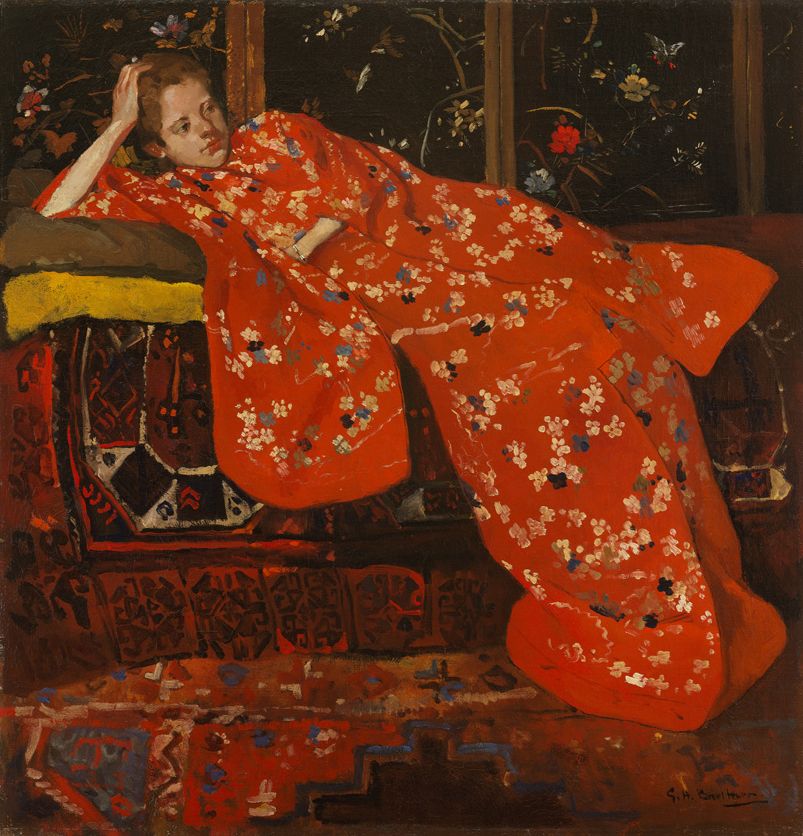
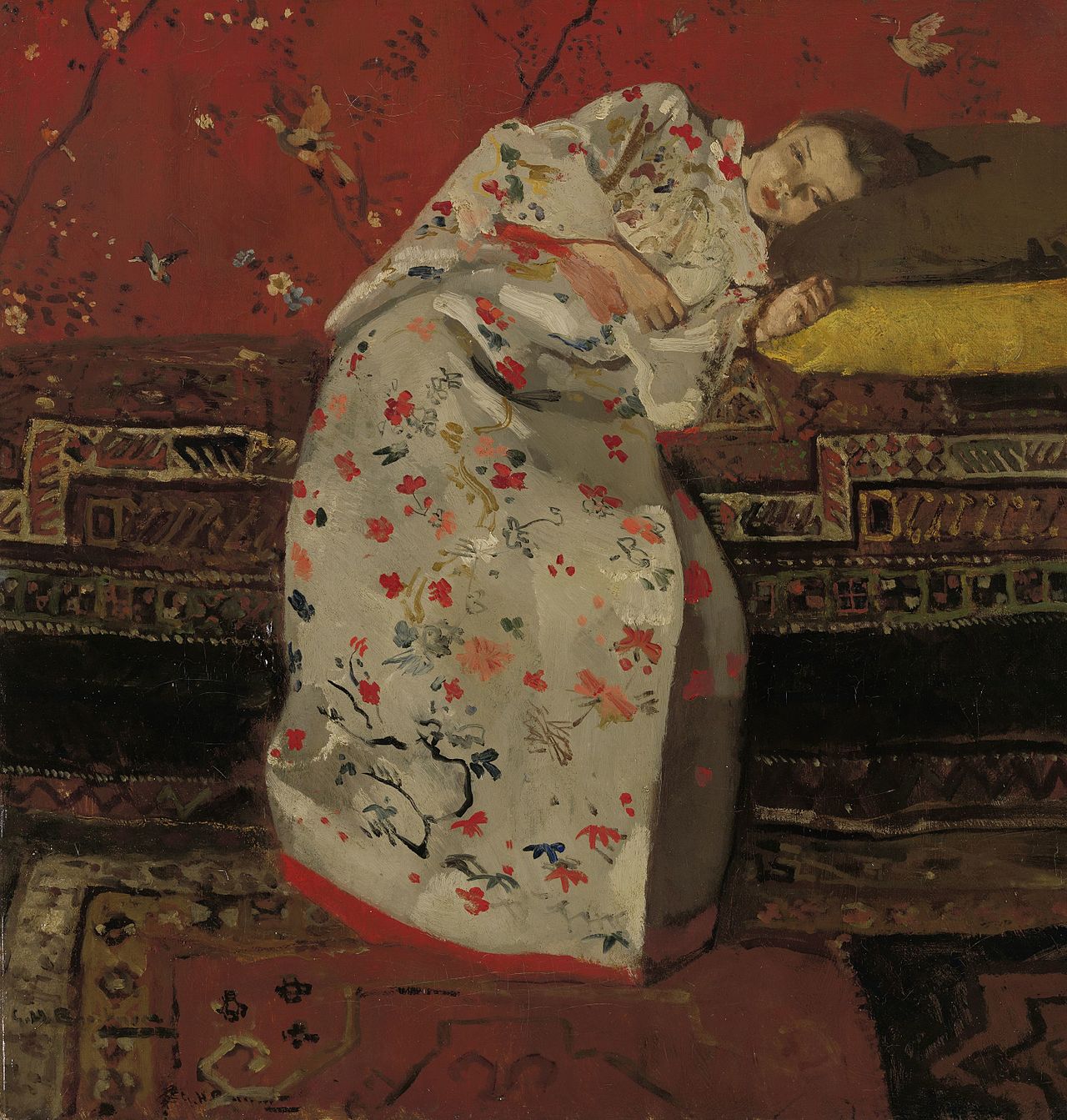
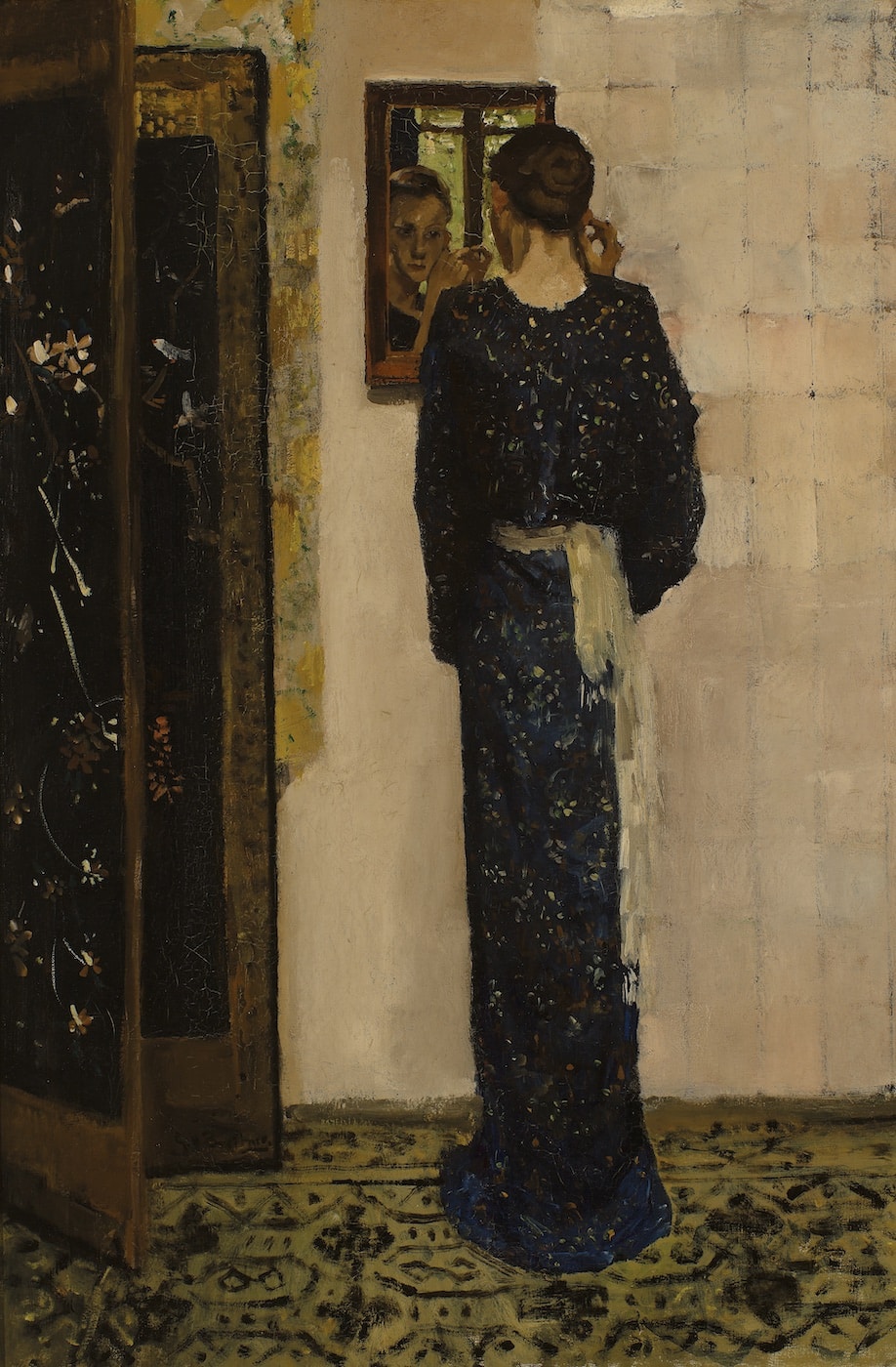
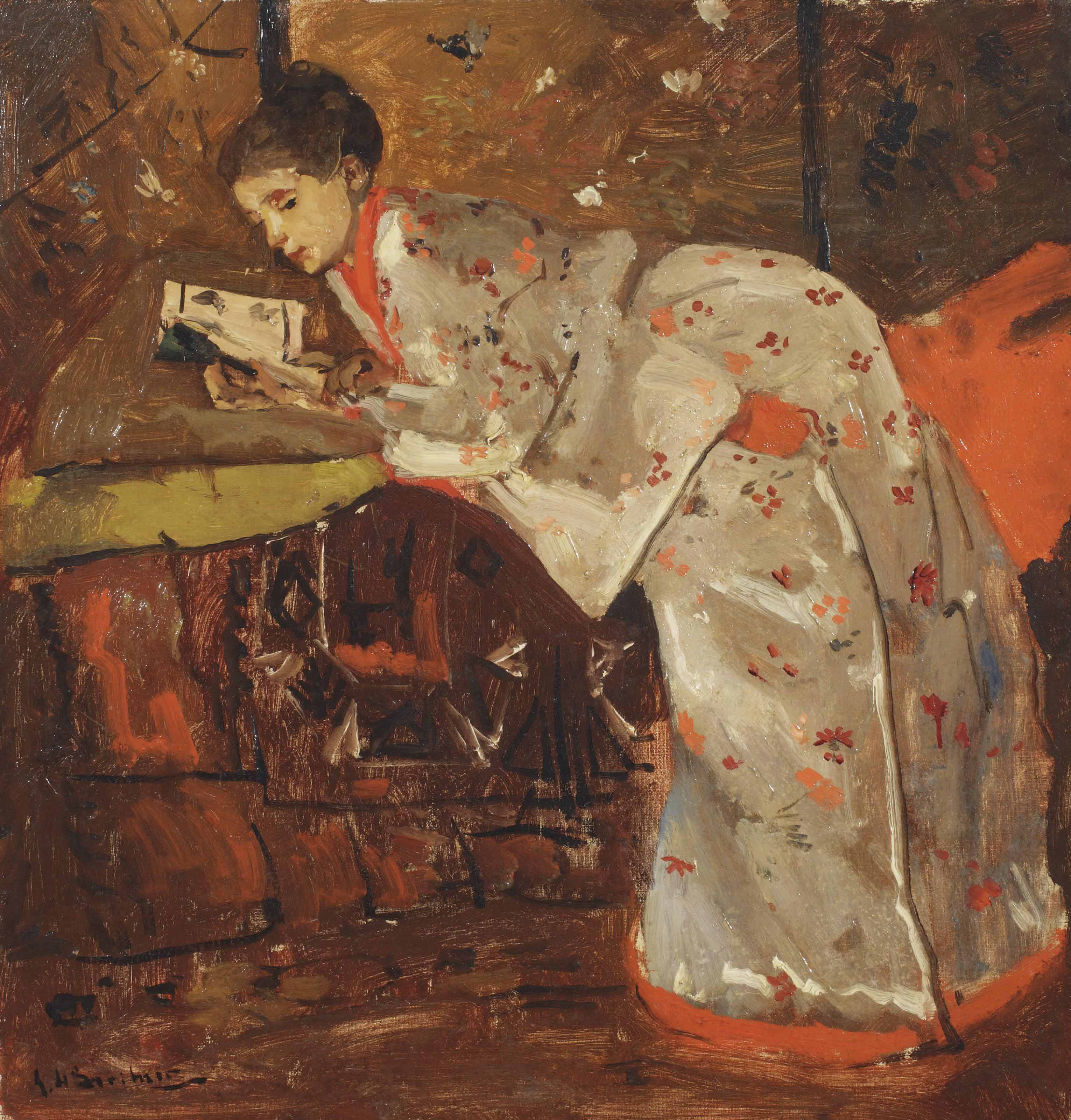
Breitner’s Girls in Kimono series
 プロテオドラ Theodora Poulot