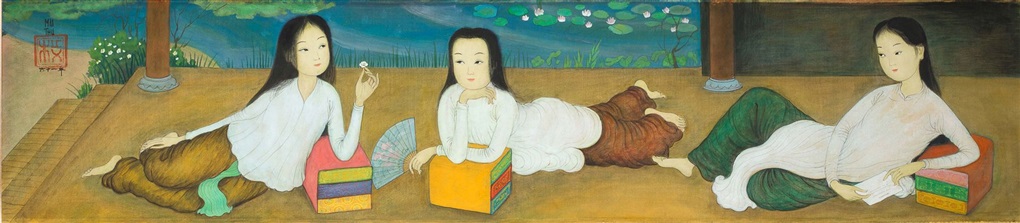
Just as Johannes Vermeer captured intimate domestic scenes in Dutch homes and Edward Hopper portrayed the quiet stillness of American life, painters Mai Trung Thứ and Lê Phổ masterfully depicted the serene rhythms of Vietnamese daily life. Born in 1906 in the peaceful village of Ro-Nha in northern Vietnam during the French colonial period, Mai Thứ was steeped from his earliest days, in an environment where culture and artistry were held in high esteem. Growing up in a well-known Tonkinese family, with a father who held a high mandarin office, he attended the French Lyceum in Hanoi.
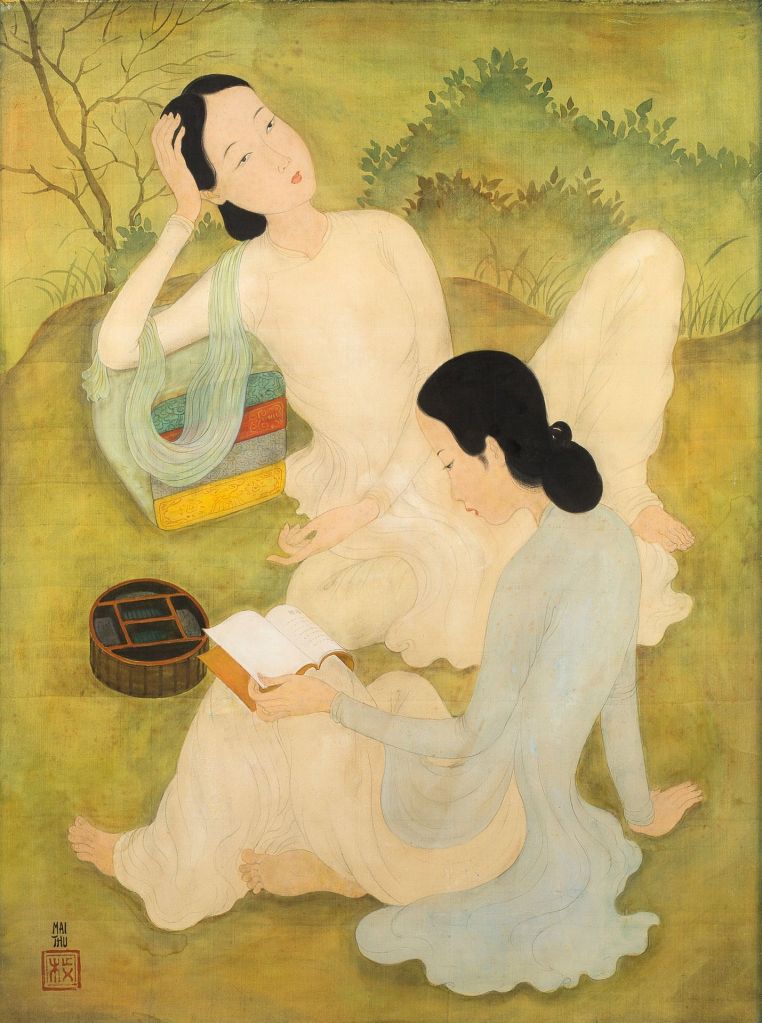
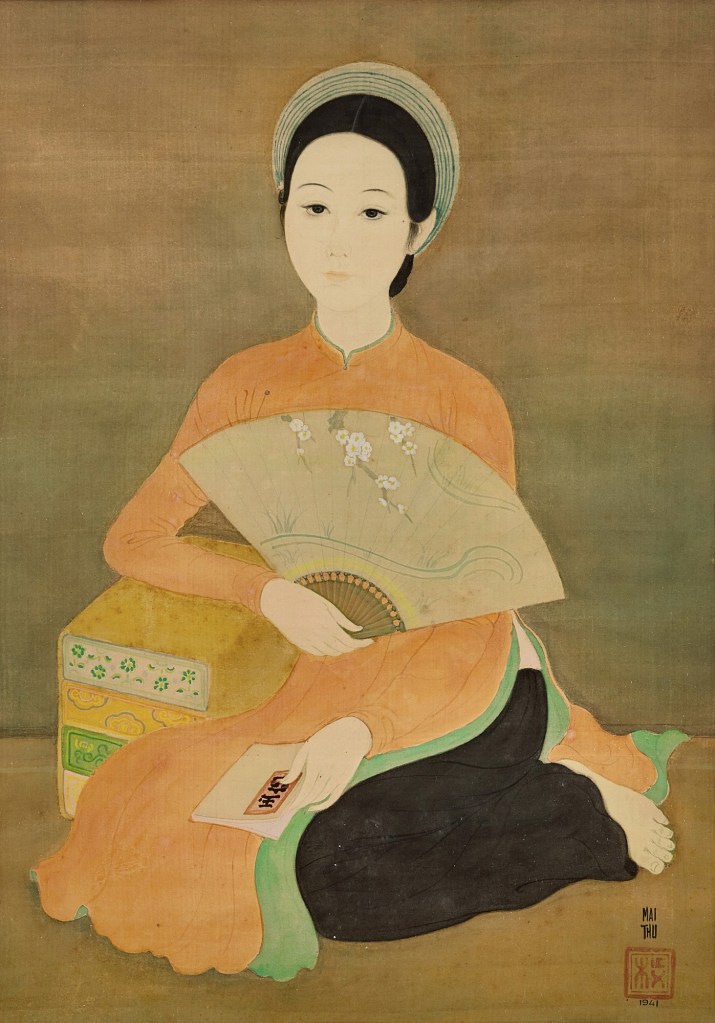
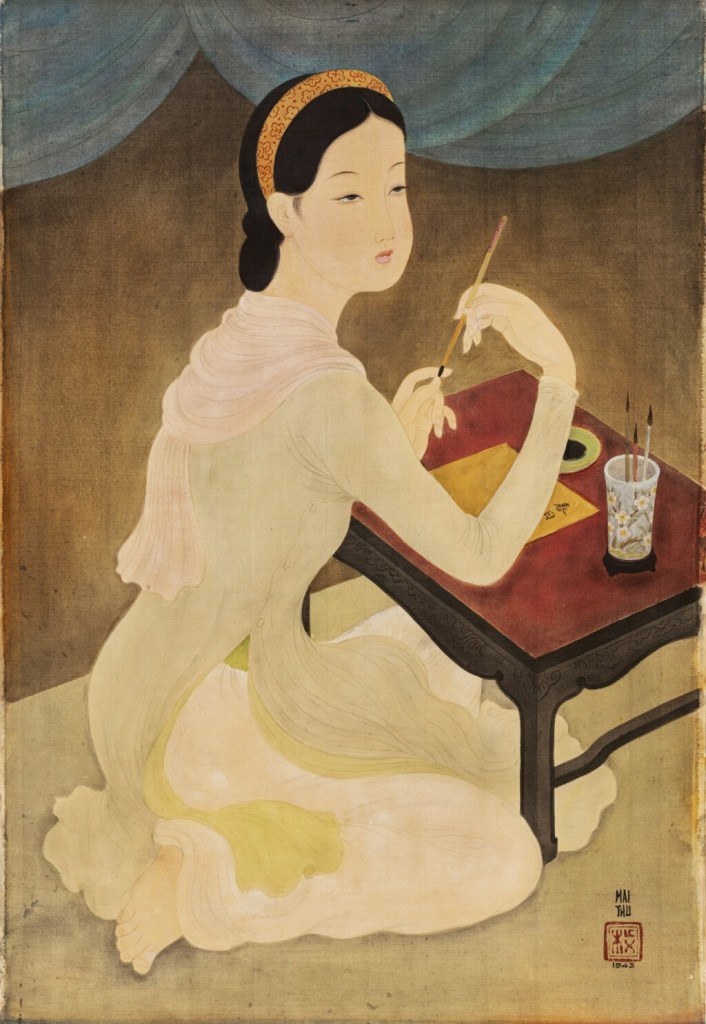
ca. 1940–1945, Ink and color on silk, 73 x 53.8 cm (28.7 x 21.2 in.)
Mai Trung Thứ joined the Indochina School of Fine Arts where he studied from 1925 to 1930. Both Mai Trung Thứ and Lê Phổ (1907-2001) emerged from the same cohort at the École des Beaux-Arts de l’Indochine and began their artistic careers around the same time. Their paths do share several similarities. Both taught drawing in Vietnam—Lê Phổ at the École des Beaux-Arts itself and Mai Trung Thứ at a high school—before relocating to Paris in 1937 to participate in the International Exposition of Decorative Arts.
In Paris, they immersed themselves in the dynamic art scene, connecting with other Vietnamese painters. Following their visit, both decided to make France their permanent home, living in Paris and showcasing their work at various exhibitions, including the Salon des Indépendants and the Salon d’Automne.
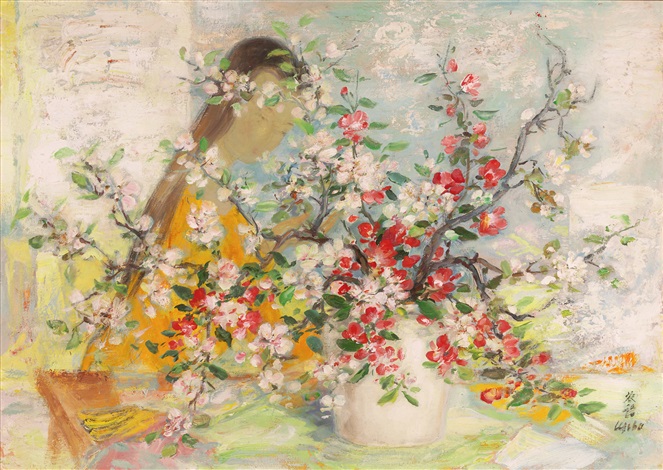
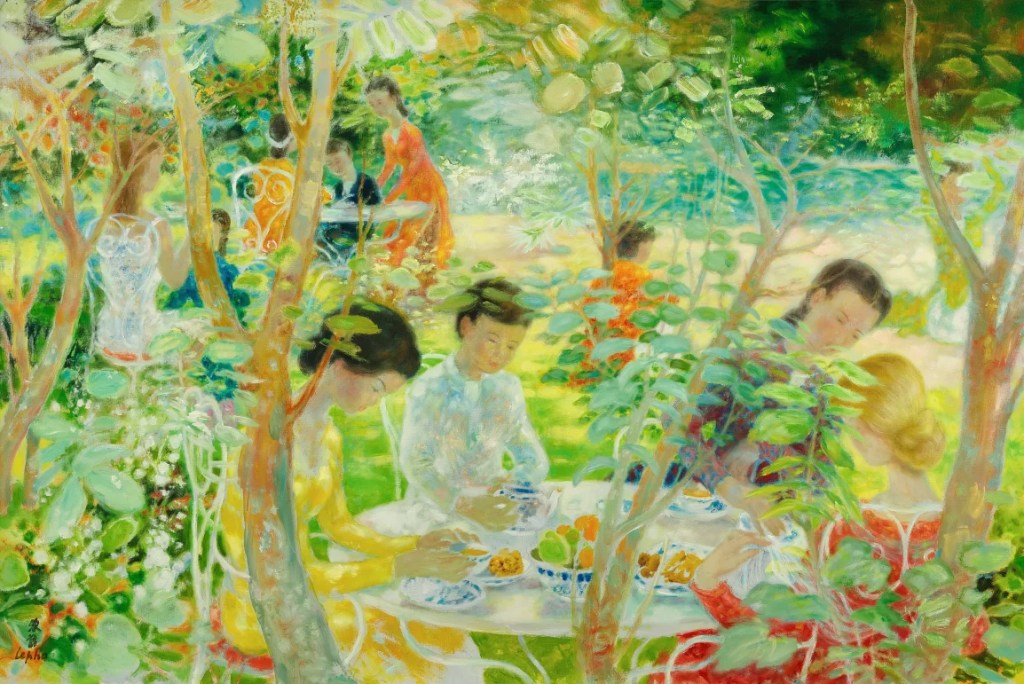
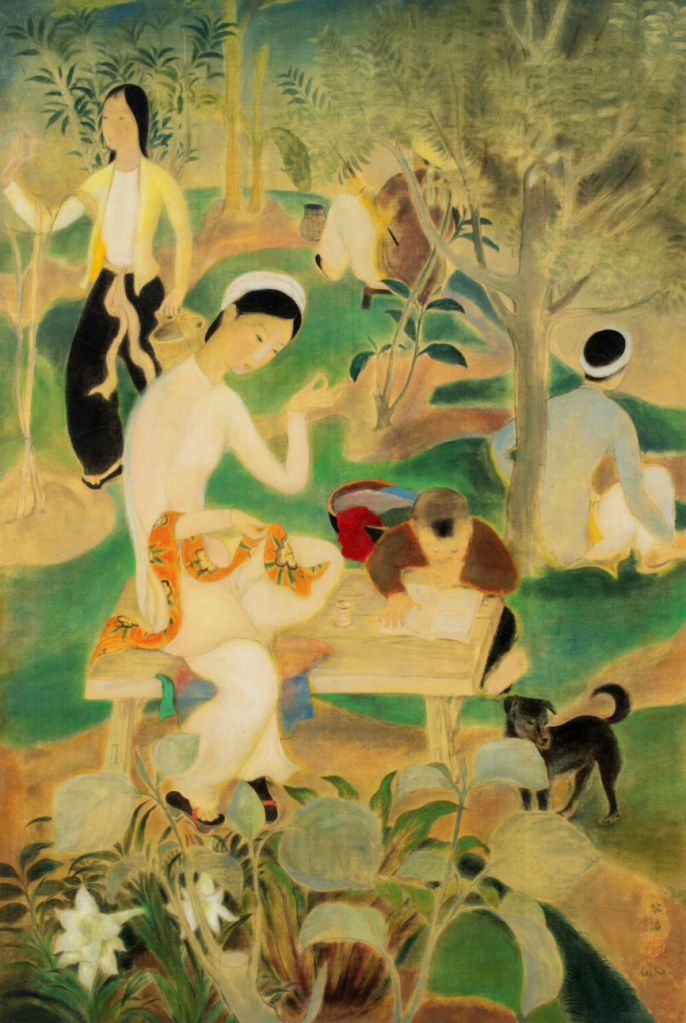
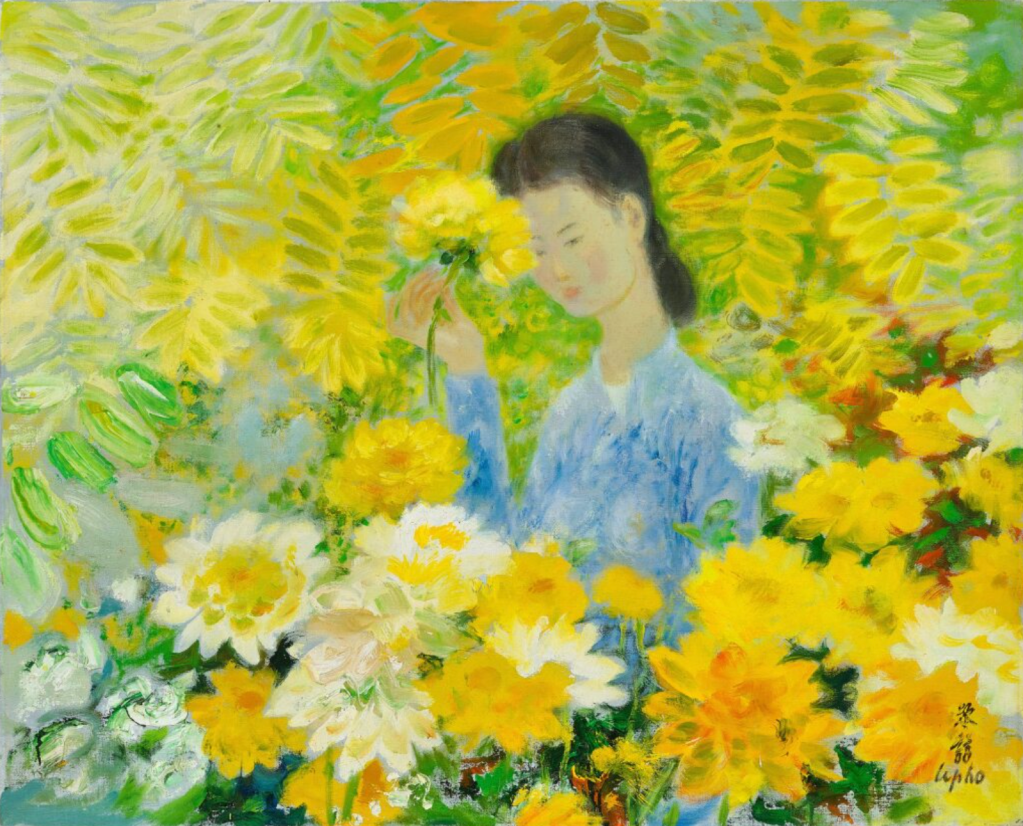
Lê Phổ is best known for his stylized depictions of nudes, gardens, and floral still lifes. He drew inspiration from Impressionism, Surrealism, along with traditional Chinese art; a fusion creating a sensuous yet somewhat unsettling depiction of paradise, echoing the styles of both Odilon Redon and Pierre Bonnard.
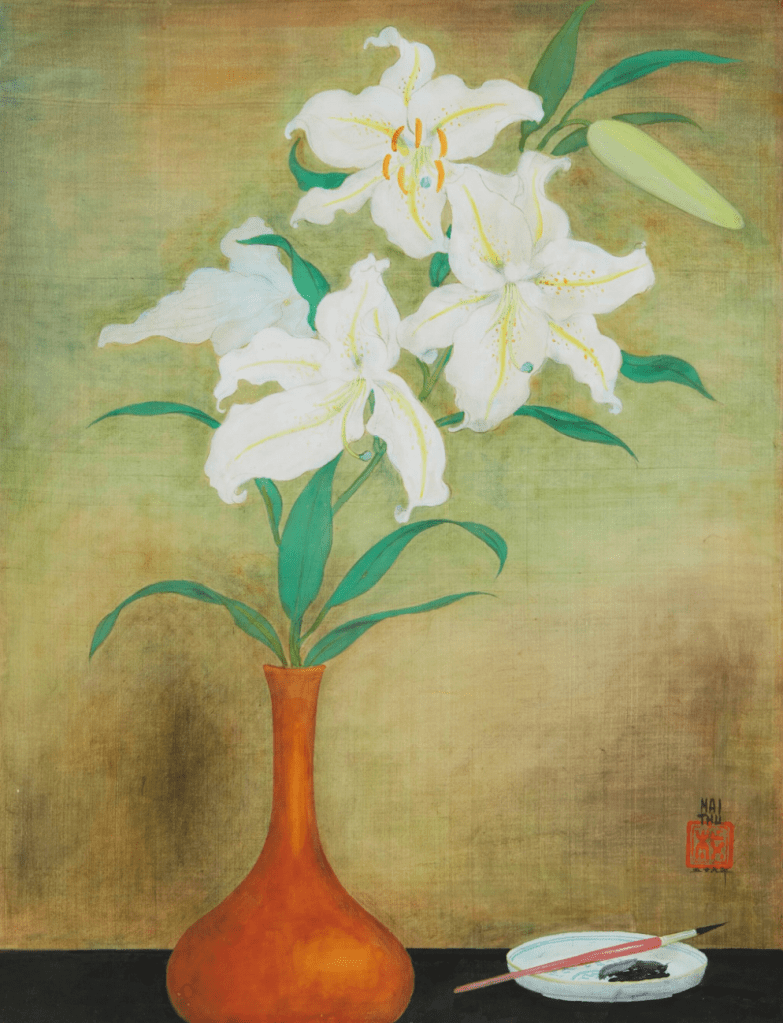
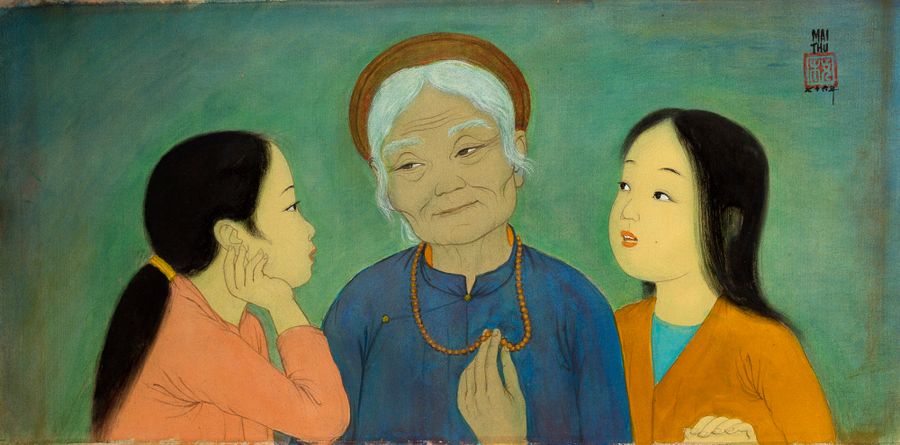
Renowned for his silk paintings, Mai Trung Thứ was a man of diverse talents who explored filmmaking, photography, and music. He is globally recognized for his depictions of children, but his artistic themes are diverse, ranging from portraits of women and Vietnamese family scenes to floral compositions.
1956, ink and gouache on silk, 60.5 x 46 cm (23 ¾ by 18 ¼ in.)
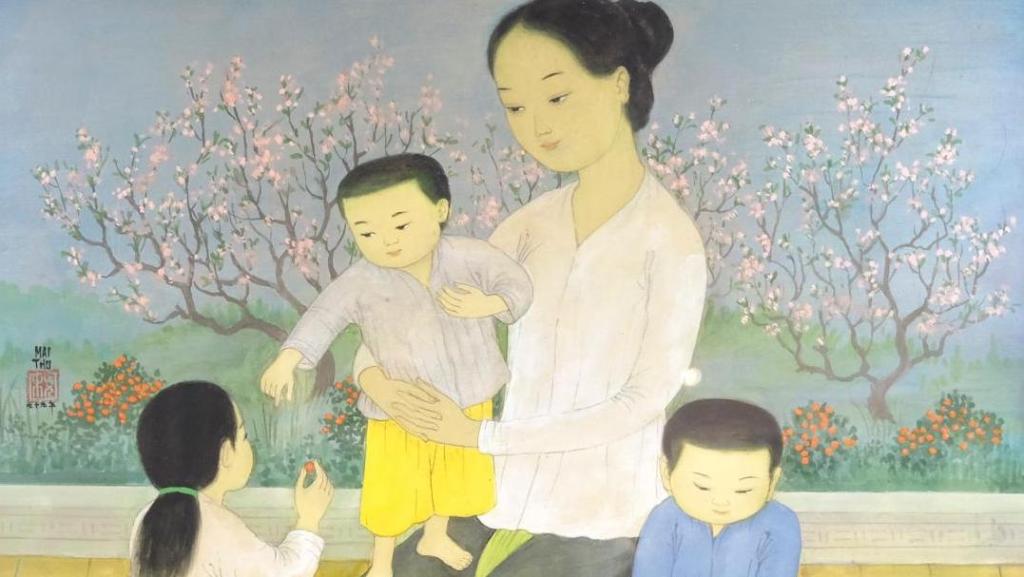
Mai Thứ was remarkably skillful with his hands. This led him to dedicate much of his attention and time to the crafting of his paintings’ frames, which he decorated with exquisite motifs.
Through Lê Phổ and Mai Thứ’s brushstrokes, we are transported to a Vietnam of the past, one that speaks eloquently of beauty, tranquility, and the profound simplicity of everyday life.
 プロテオドラ Theodora Poulot