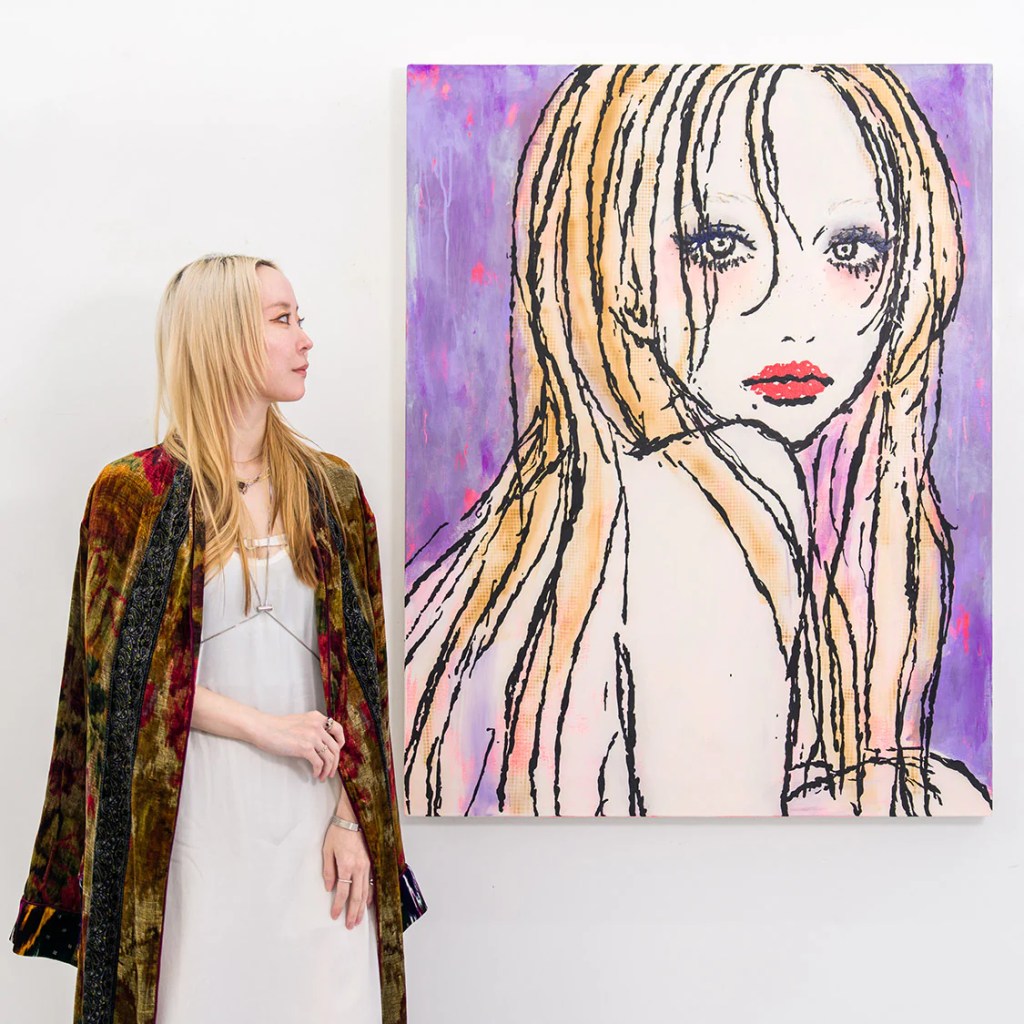

Miki Katoh, itabamoe
“Real Women – Through the Passage of Time” at Whitestone Ginza stages a dialogue between two generations of Japanese women artists who approach the question of femininity from pluralised perspectives.
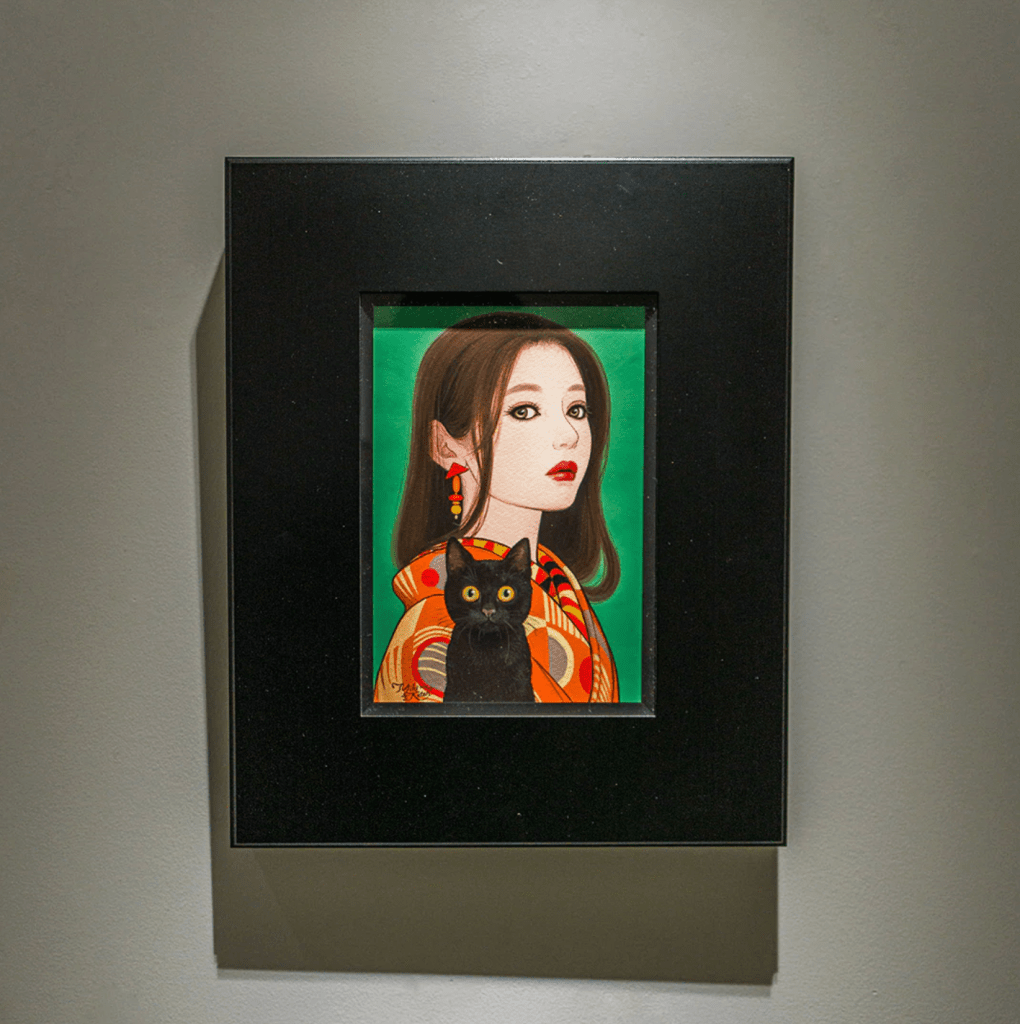
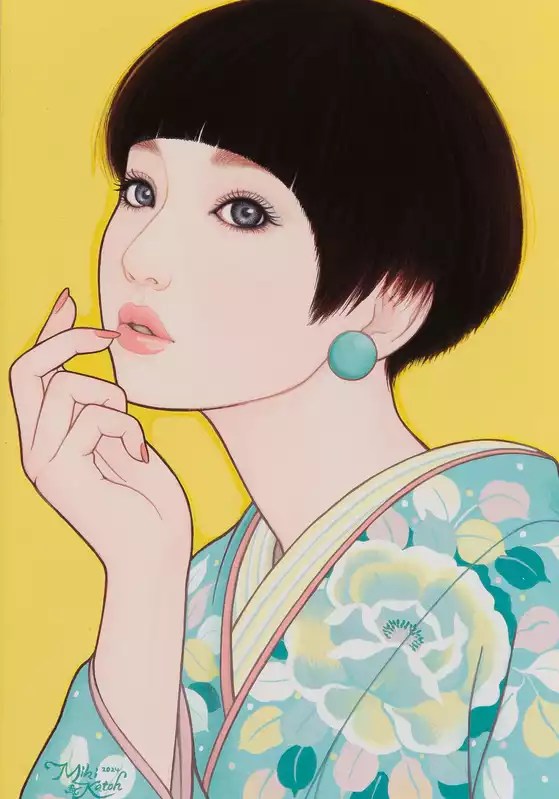
Trained in Japanese painting and kimono design, Miki Katoh reimagines the visual language of the Taishō and early Shōwa eras, when women were beginning to claim intellectual and social autonomy. In her paintings, the human and the natural coexist seamlessly. Figures shift between woman, animal, and spirit, evoking the animistic idea that everything in the world is connected.
Her tightly framed portraits recall the bijin-ga: the “pictures of beautiful women” that flourished in the Edo period, but Katoh overturns their conventions. Where those historical prints idealized passive, ornamental women under the gaze of male artists, her figures look confident and self-possessed. Their kimonos and their different patterns become emblems of self-expression and freedom, what she calls “the spirit of independent women.”
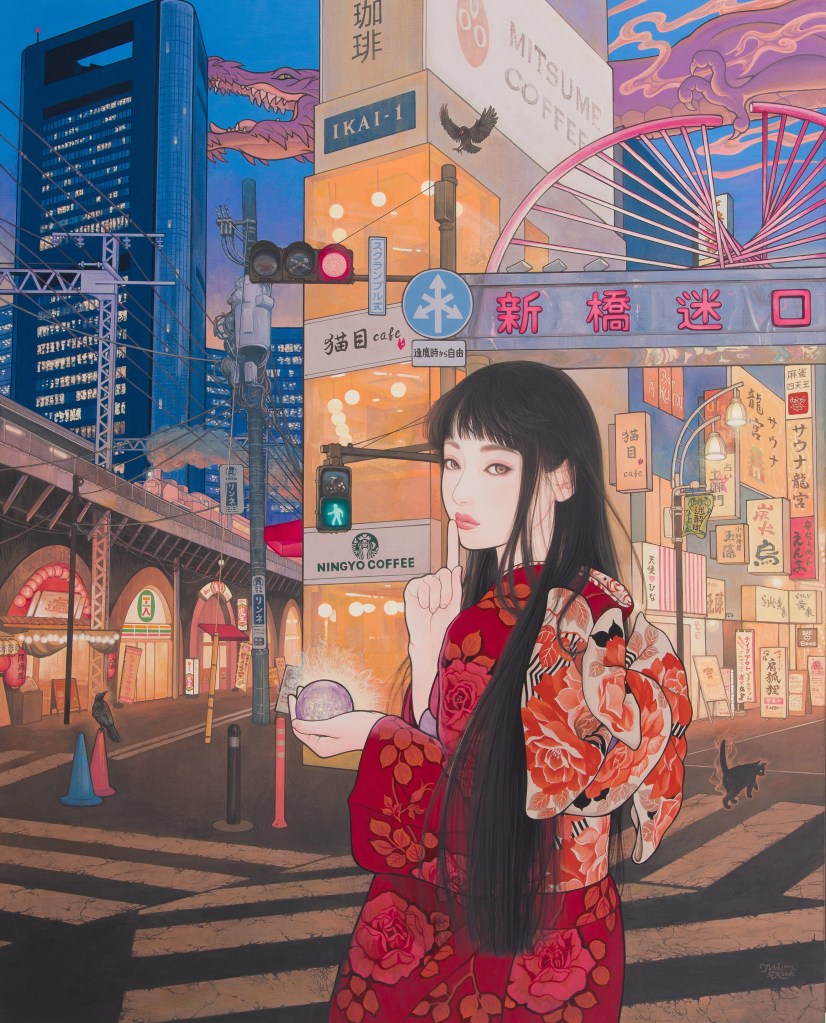
Katoh situates these women within the rhythms of modern life. In Tokyo Twilight Labyrinth, a lone figure stands before the neon haze of Shinbashi at dusk, as the city unfolds like a contemporary fable: “At twilight, a hidden alley appears. A drunken dragon drops a glowing orb—a treasure of wishes. Stolen once, it is now my secret prize.” In Trump Game: MOMO, another woman holds a deck of cards bearing the face of the U.S. president, her pose recalling the tension of Caravaggio’s card players. We are caught between complicity, irony, and critique.
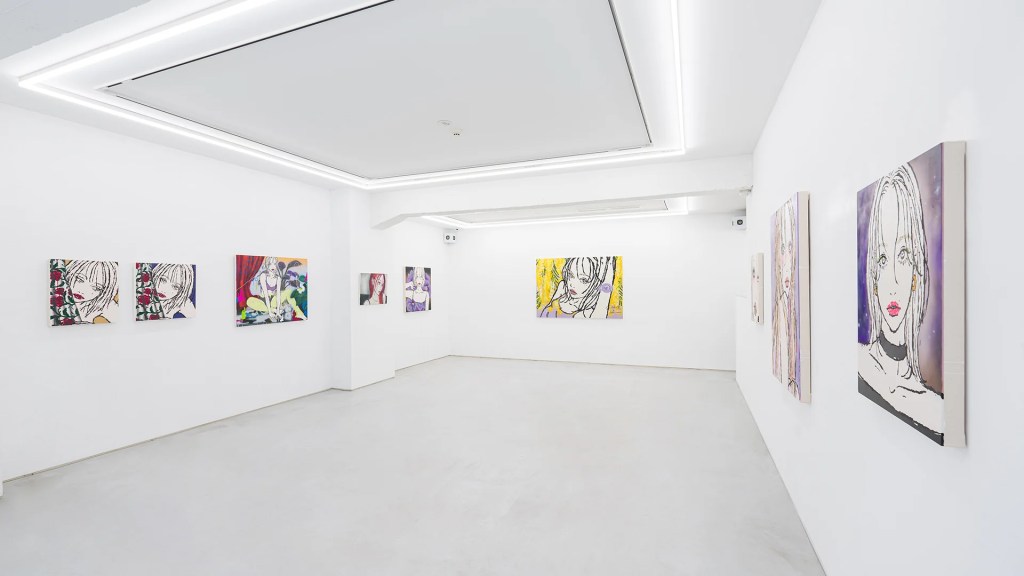
While Katoh expresses the image of women incorporating Japanese culture and historical backgrounds, creating stories rooted in time and culture, the work of former apparel designer and illustrator itabamoe channels the aesthetics of social media and advertising to examine how women are seen, and how they choose to be seen.
Born in Shizuoka in 1991 and based in Tokyo, itabamoe bridges the glossy optimism of 1990s youth culture with the image-saturated reality of the internet age, tracing how ideals of femininity evolve across media and generations.
Her portraits recall the sleek, aspirational style of contemporary magazine covers for young women. Her portraits are neither “girls” nor “women” in the strict sense—labels the artist finds reductive—but they embody the ii onna, the “ideal woman”: graceful, composed, and alluring, yet beyond definition. By creating these multifaceted figures, she exposes the contradictions embedded in everyday beauty culture and shows that identity, like beauty, is never fixed but continually rewritten.
 プロテオドラ Theodora Poulot