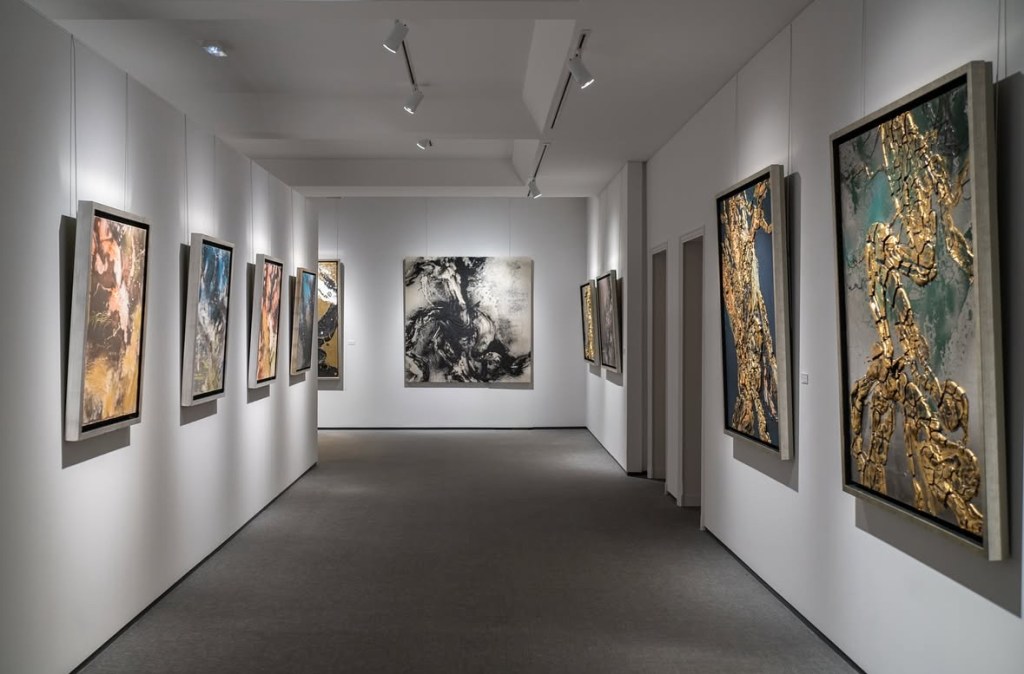
From October 9 to November 8, Galerie Tamenaga Paris presents a commemorative retrospective on the works of Takehiko Sugawara. The artist, who was born in Tokyo in 1962, tragically accidentally passed last summer during a solitary trek on Mount Tsurugi to study Toyama’s ancient cedars.
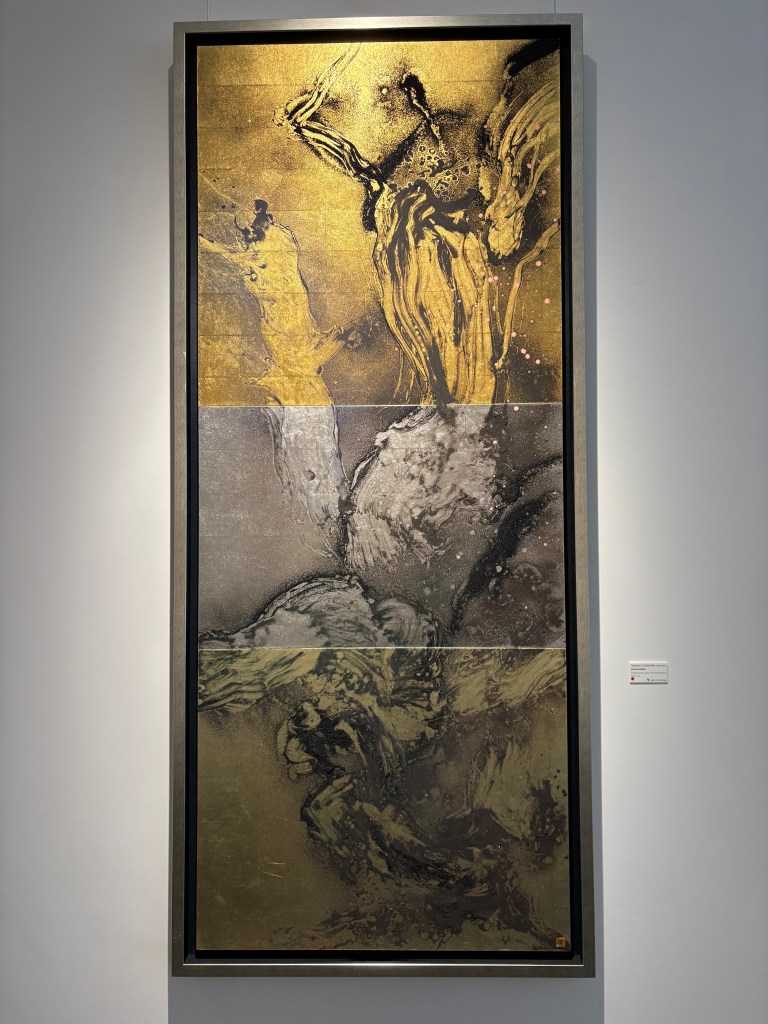
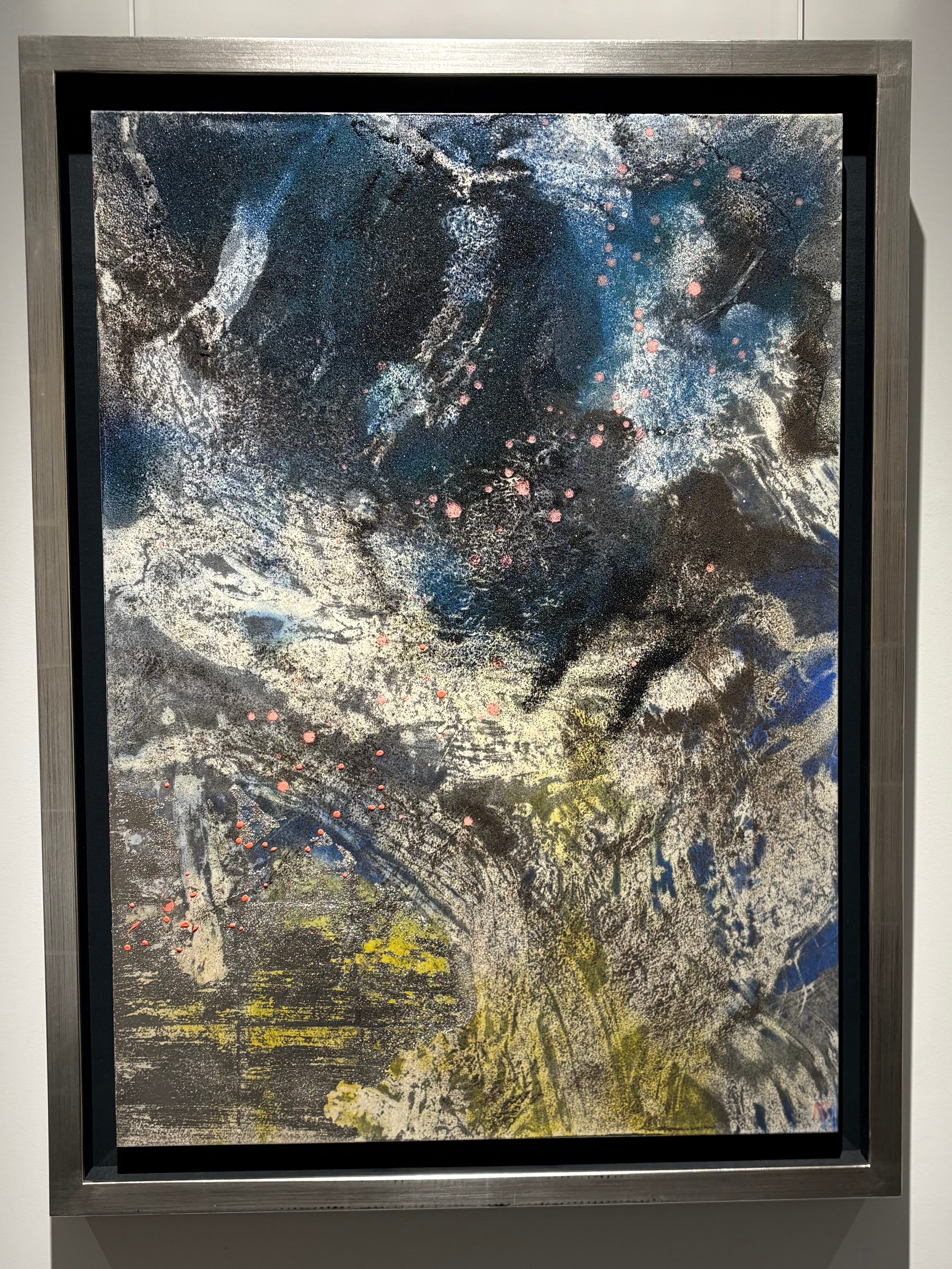
His work merges different traditions: he followed the tradition of Nihonga: a style of Japanese painting that emerged during the Meiji period and that used mineral pigments, washi paper, and metal leaf, researching on old masters such as Eitoku Kano and Tohaku Hasegawa. But at the same time, he explores new ways of it by using breathtakingly dynamic techniques with burnt pine which is thickly applied to the paper and references to postwar contemporary art — formative encounters with Misao Yokoyama in 1986 and Anselm Kiefer during a period in Düsseldorf (1995–96) sharpened his sense of scale and matter.
For Sugawara, charcoal and soot serve as vessels of memory, compressed, fractured, and layered into surfaces where landscape blurs into abstraction, creating a visual language that feels both timeless and elemental.
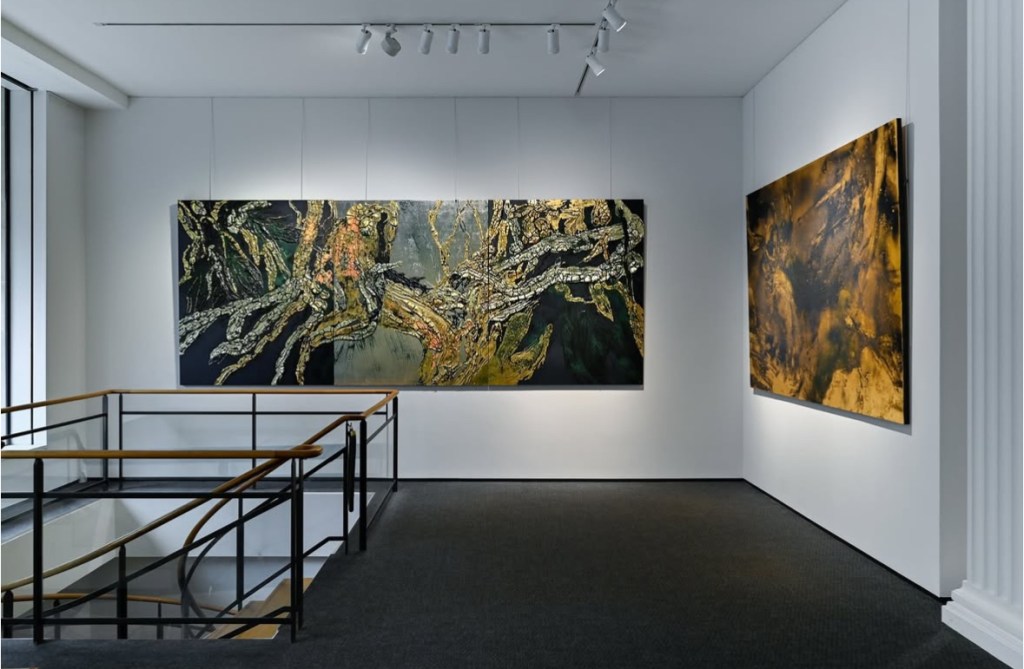
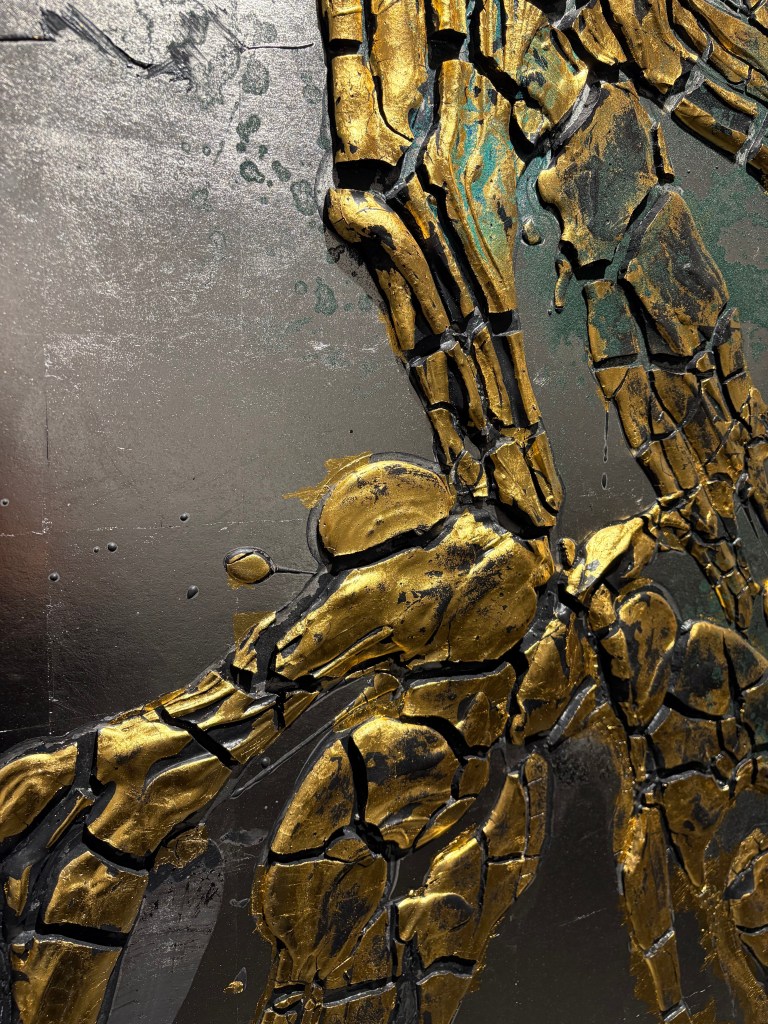
He transforms shōen: a traditional blend of Chinese ink, pine soot, and glue, into a thick, tactile paste, spreading and pressing it across the surface with wide brushes and his hands. As the material settles and dries, it creates beautiful cracks that have their own patterns and relief. It creates a thick surface, that has something like living bark, some might say it looks just like trees, and it works as a manifestation of the trees energy.
The exhibition brought together several monumental triptychs, including Miharu Takizakura, a work nearly eight meters long that unfolds like a vast monochromatic landscape. At the gallery entrance, Nanahirosugi (2024) stood as one of the centerpiece works. Spanning almost five meters, the triptych radiates an organic energy and encapsulates what defines Sugawara’s art: a painting of vital force rather than form, where matter itself becomes memory: of fire, wood, earth, and time.
Settling in Yamanashi among millennial cherry trees and rugged terrain, Sugawara viewed nature as a major source of inspiration. Among the subjects of his canvases were ancient trees, waterfalls, wind, roots, and bark, which express not depiction but embodiment of life’s energy. “Perhaps I was not only searching for trees. In truth, I was pursuing the very life-force of the Earth,” he once reflected.
The word ruten (流転) is a term Sugawara cherished. It evokes the ceaseless flow and continuous transformation of all things, the passage from life to death, and the subtle continuity between disappearance and renewal. In this exhibition, the concept becomes both tribute and exploration: the current that courses through Sugawara’s painting remains vibrant despite his absence.
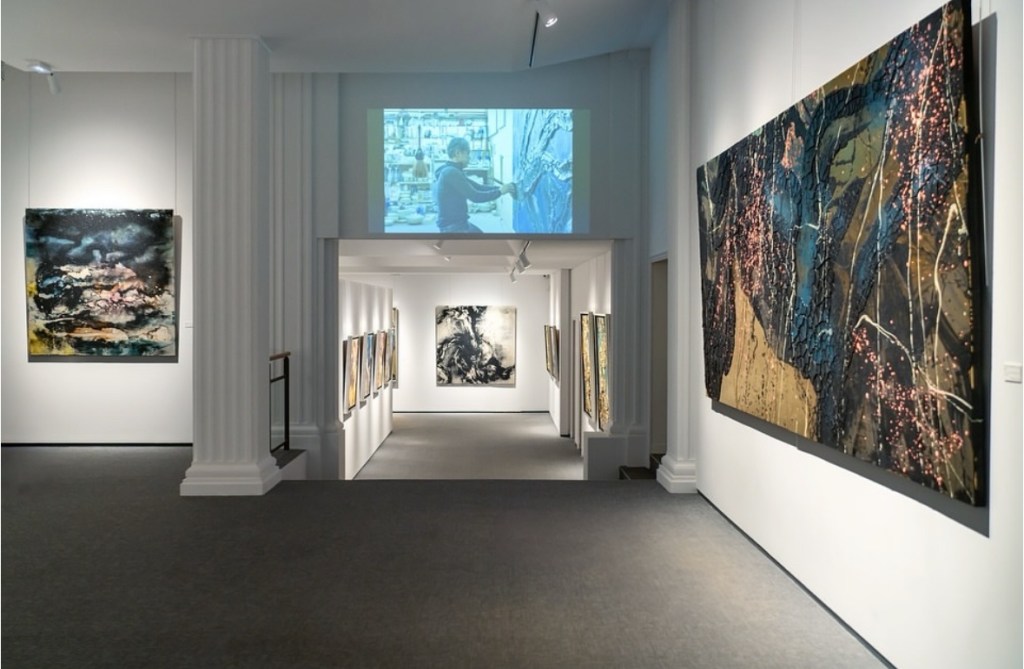
Featuring nearly forty paintings and drawings, the exhibition, which was organized with his family and the gallery that has championed his work since 2012, brings together nearly 40 paintings and drawings from the past 13 years, including works recently retrieved from his studio.
This Paris exhibition is now a tribute to his life and work. Conceived as one of the projects he found most invigorating, it traces a journey through the forms, motifs, and material experiments that defined his practice and established his singular voice within contemporary Japanese art.
 プロテオドラ Theodora Poulot