©
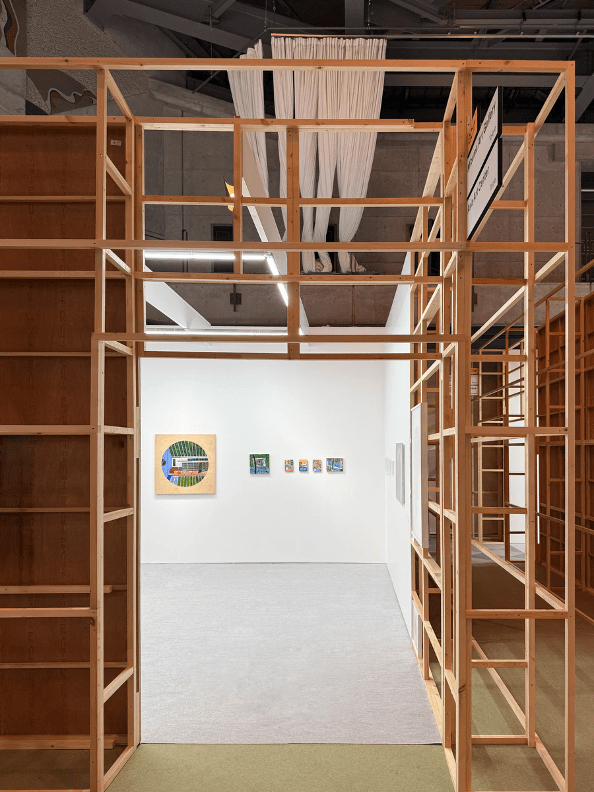
– Mizuma Art Gallery’s booth, 2025.
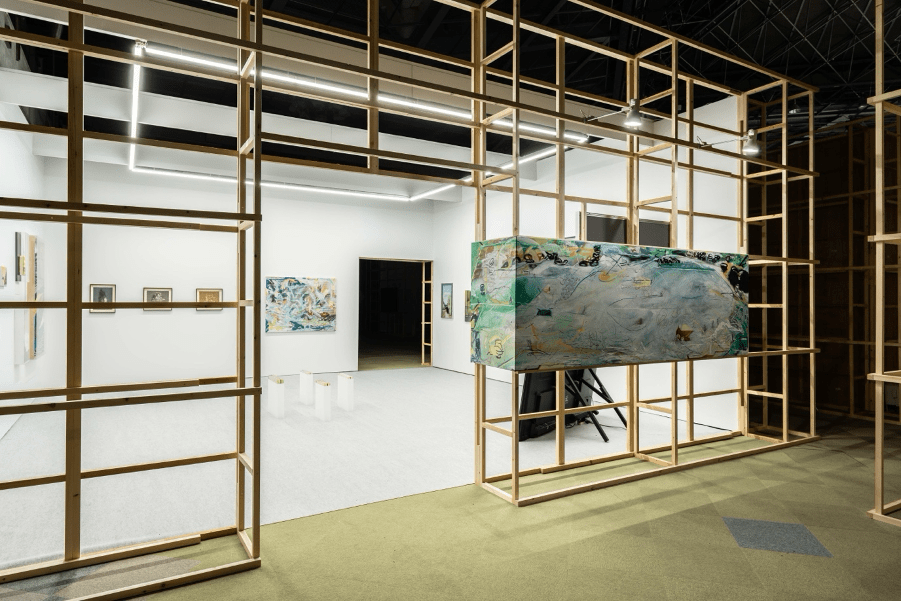
– A Thousand Plateaus Art Space, ANOMALY, and N/A booth. Courtesy ACK. Photo: slide//show, 2024.
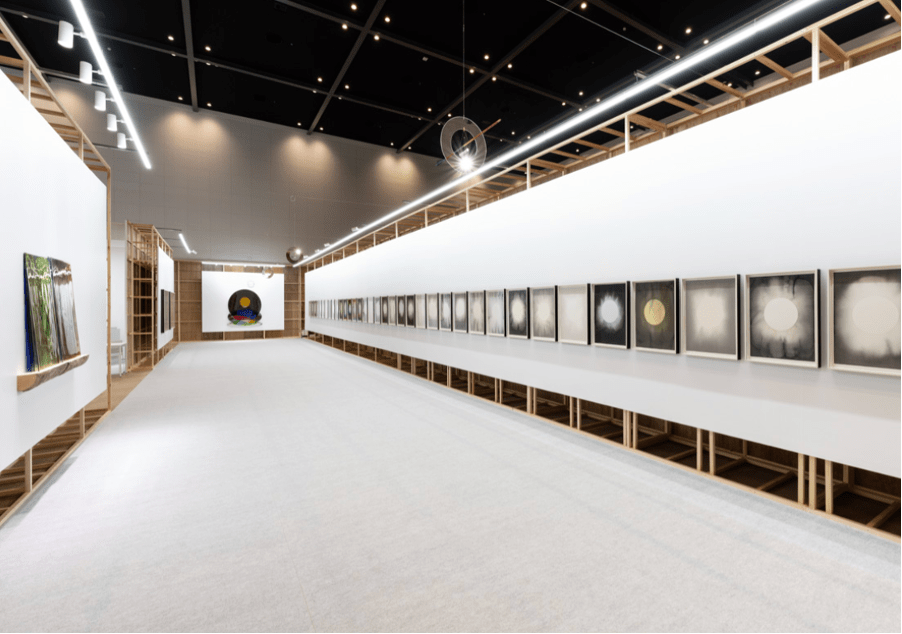
– View of works by Olafur Eliasson at the neugerriemschneider booth, Art Collaboration Kyoto, 2023.
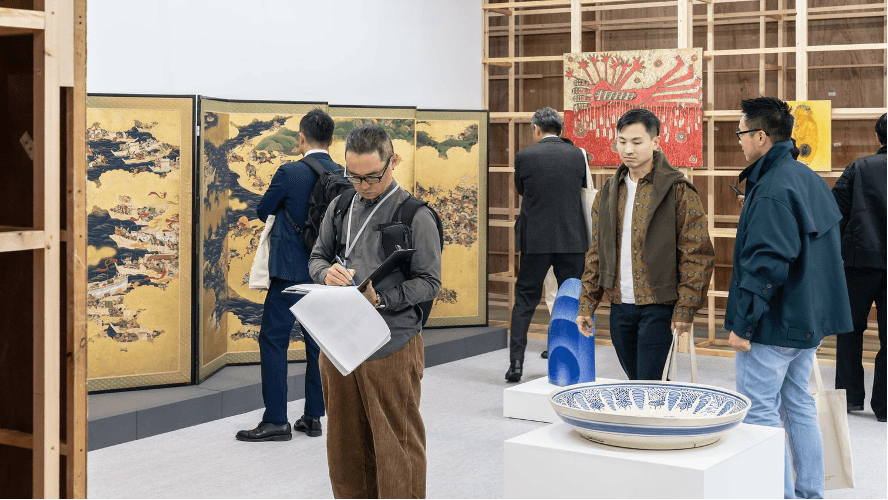
– View of the Shibunkaku (Kyoto) and Crèvecœur (Paris) booth at Art Collaboration Kyoto, 2023.
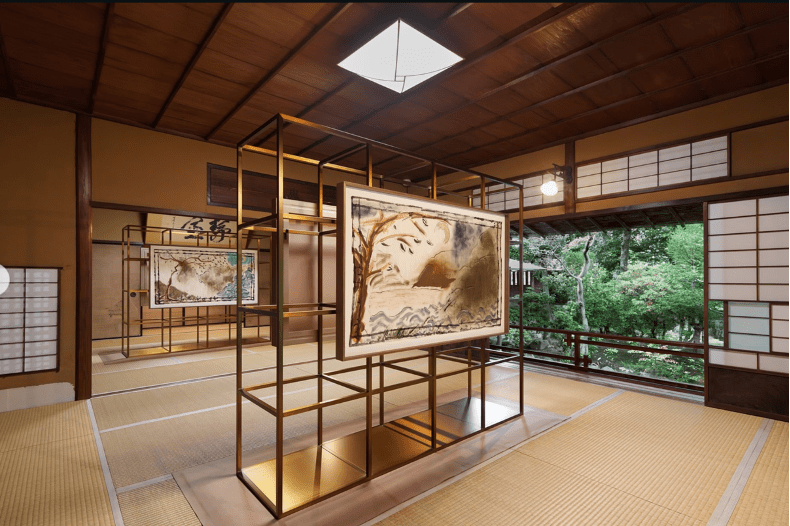
– “Isabella Ducrot – Incongruous” solo exhibition in the Kōseiin Temple, Kyoto, presented by Sadie Coles HQ, 12 November – 2 December 2025.
In recent years, debates surrounding the future of art fairs have shifted beyond questions of scale and expansion. As art fairs have become a central infrastructure of the contemporary art world, post-pandemic constraints on mobility and growing concerns over sustainability have prompted renewed scrutiny of how these global models operate across both established and emerging markets.
Yet, despite increasing calls for locality and environmentally responsible practices, the art fair circuit continues to expand, driven by intense competition for visibility, market share, and revenue. While this competitive climate pushes many fairs to replicate the formats and strategies of dominant players leading to increasing standardisation, others respond by developing alternative, collaboration-based models. This essay focuses on Art Collaboration Kyoto (ACK), an art fair rethinking how international circulation might coexist with local specificity, connectivity and more sustainable modes of cultural production.
This paper will thus explore how Art Collaboration Kyoto challenges the dominant expansion-driven art fair model by advancing a decentralised, locality-focused, yet internationally engaged alternative.
My argument will be structured into two parts. The first will focus on the global expansion model of art fairs, tracing the rise of large-scale operators and the structural critiques that have emerged in response, with particular attention to Art Collaboration Kyoto as a singular case within the global landscape. The second section will turn to the concept of glocalisation as a critical framework and analyse Art Collaboration Kyoto’s position as a locality-driven alternative, while exploring how collaboration and regional partnerships offer a different vision for the future of the art fair.
Since the early 2000s, the contemporary art market has entered a phase of accelerated internationalisation, structurally evidenced by the expansion and multiplication of art fairs. Nearly 80% of today’s fairs were established between 1999 and 2010, ushering in what has been described as “the art fair age[1].” In this context, art fairs evolved from isolated, locally anchored events to multinational corporations. This transformation was closely tied to broader processes of globalisation, a term that Zarobell defines as the shift of art-related activity from primarily national or regional frameworks to an increasingly integrated global system[2]. In this configuration, art fairs function as instruments of soft power and nation branding, while also producing cultural capital where institutional prestige plays a central role in shaping value and visibility[3]. As Western-based organisers such as Art Basel and Frieze capitalised on globalisation to expand internationally, many new fairs in cities previously considered “peripheral”—including Shanghai, Dubai, or Delhi[4]—emerged under European leadership, often within postcolonial contexts. While international art fairs facilitate the circulation of ideas across borders, globalisation has also driven the standardisation of the fair model. Economic and symbolic power is concentrated in a small number of cities, pushing emerging fairs to conform to dominant formats[5]. One clear manifestation is the widespread use of the “white-cube” booth, a display model that has become hegemonic across galleries and art fairs despite reinforcing capitalist and Western-centric structures of value. As commercial pressures intensified, many of the initiatives that once differentiated fairs have disappeared, such as Frieze Projects (2003–2008), which introduced experimental, site-specific works in non-commercial spaces and encouraged more active, risk-taking forms of engagement. In this sense, globalisation has contributed to a loss of differentiation. Drawing on Pierre Bourdieu, globalisation can thus be read as the reproduction of frameworks shaped by dominant centres, which present unequal power relations as natural and inevitable[6]. This dynamic calls into question the role of art fairs today: do they facilitate genuine international exchange, or do they primarily reproduce existing market hierarchies?
[1] Soo Hee Lee, & Jin Woo Lee. “Art Fairs as a Medium for Branding Young and Emerging Artists: The Case of Frieze London,” The Journal of Arts Management, Law, and Society 46 (2016): 95-106. 10.1080/10632921.2016.1187232.
[2] John Zarobell. Art and the Global Economy (University of California Press,2017). 10.1525/9780520965270.
[3] Pierre Bourdieu, “Les trois états du capital culturel,” [The Three Forms of Cultural Capital]. Actes de la recherche en sciences sociales 30 (1979).
Pierre Bourdieu, “The Forms of Capital,” in Handbook of Theory and Research for the Sociology of Education, ed. J. G. Richardson (New York: Greenwood Press, 1986), 241–58.
[4] Several major art fairs established in emerging markets were initiated or controlled by Western actors. Examples include ShContemporary Shanghai, directed by Lorenzo Rudolf, who later founded Art Stage Singapore; Art Dubai, founded by British art professionals John Martin and Benedict Floyd; and India Art Fair, which was co-founded and remains owned by British stakeholders.
[5] Recent launches such as Frieze Abu Dhabi and Art Basel Qatar illustrate how art fairs operate as instruments of cultural diplomacy. They convert cultural capital into symbolic authority (Bourdieu 1986), while simultaneously serving as tools of nation branding through the strategic construction of national image on the global stage (Anholt 2007).
[6] Pierre Bourdieu and Loïc Wacquant, “On the Cunning of Imperialist Reason,” in Theory, Culture & Society 16 (1999).
 プロテオドラ Theodora Poulot